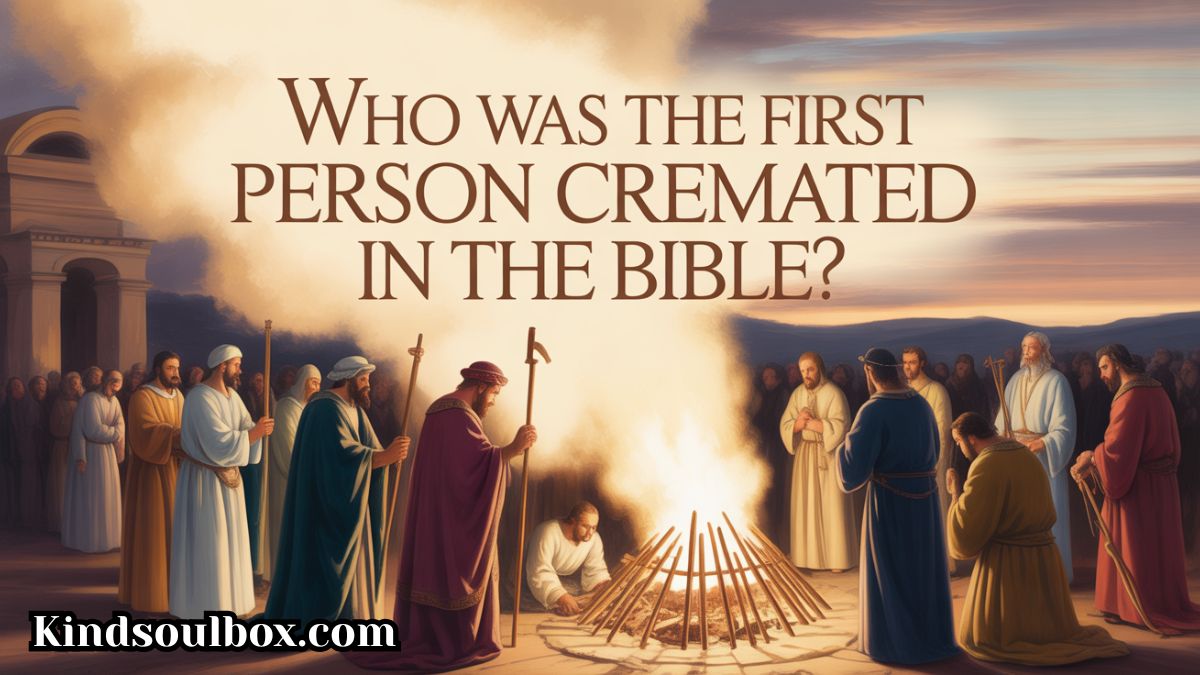
Who was the first person cremated in the Bible refers to identifying the earliest biblical account where human remains were consumed by fire. Unlike modern funeral practices, ancient Scripture records burning bodies primarily as divine judgment, judicial punishment, or emergency measures rather than chosen cremation ceremonies. Who Was the First Person Cremated in the Bible?
Here’s what shocks most Bible readers: the answer isn’t simple. Scripture never presents cremation as God’s people practiced it today. Instead, fire-consuming corpses carried dark theological weight—signaling God’s wrath, severe criminal punishment, or desperate wartime circumstances that forced deviation from sacred burial traditions.
The first person cremated in the Bible might be Achan, the troubler of Israel, whose stoned body burned as judgment. Or perhaps King Saul, whose battle-ravaged corpse received emergency burning by grateful rescuers. Even Sodom’s inhabitants, consumed by heavenly fire, entered this grim list. Each account reveals profound truths about biblical values, resurrection hope, and how ancient believers honored—or dishonored—the dead.
Understanding Biblical Cremation vs. Modern Cremation
Before diving into specific biblical accounts, we must establish a critical distinction. Modern cremation refers to a chosen funeral practice where deceased bodies are intentionally reduced to ashes through controlled burning. This contemporary method serves as an alternative to traditional burial. Who Was the First Person Cremated in the Bible?
Ancient Hebrew burial customs tell a different story entirely. The Jews consistently practiced interment—placing bodies in tombs, caves, or graves. Fire rarely touched corpses except under extraordinary circumstances.
When bodies burned in Scripture, it typically signified:
- Divine judgment and wrath against sin
- Judicial execution for severe crimes
- Emergency measures during warfare
- Desecration by enemies
- Pagan idolatry involving child sacrifice
The cultural aversion to cremation among ancient Hebrew burial customs stemmed from theological convictions about bodily resurrection of the body and respect for God’s creation. Every person bore God’s image, making the body sacred even after death.
This context matters tremendously. We cannot simply transplant modern cremation practices onto ancient texts without understanding what the burning of bodies meant to biblical doctrine and practice.
The Destruction of Sodom and Gomorrah: Divine Fire
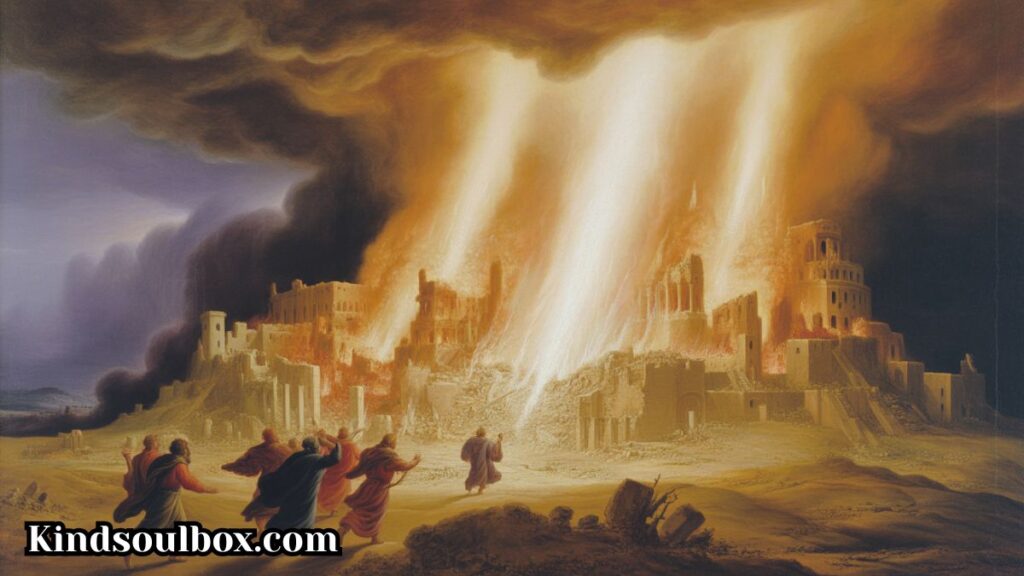
The destruction of Sodom and Gomorrah represents perhaps the earliest mass burning of human bodies recorded in Scripture. Genesis 19:24-28 describes catastrophic divine judgment through fire:
“Then the LORD rained upon Sodom and upon Gomorrah brimstone and fire from the LORD out of heaven” (Genesis 19:24, King James Version).
Abraham witnessed the devastation from afar: “And he looked toward Sodom and Gomorrah, and toward all the land of the plain, and beheld, and, lo, the smoke of the country went up as the smoke of a furnace” (Genesis 19:28).
Was This Cremation?
Technically, no. The inhabitants of Sodom and Gomorrah experienced divine wrath, not a funeral practice. Several distinctions matter here:
| Aspect | Sodom & Gomorrah | Modern Cremation |
|---|---|---|
| Intent | Punishment for wickedness | Funeral choice |
| Agent | Divine fire from heaven | Human decision |
| Survivors | None (except Lot’s family) | Family arranges |
| Theology | Judgment against sin and punishment | Neutral practice |
The fire from heaven consumed everything—buildings, vegetation, people, animals. This wasn’t the selective burning of deceased bodies but the wholesale destruction of living inhabitants caught in their sin and punishment.
Archaeological evidence near the Dead Sea reveals ancient settlements destroyed by intense heat and catastrophic events. While scholars debate exact locations, the biblical account clearly presents this as judgment by fire, establishing a pattern where fire symbolizes God’s holiness, consuming unrepentant sin and punishment.
The Law of First Mention in biblical interpretation suggests that how a concept first appears often sets its theological tone. Fire consuming people initially appears as divine punishment—a sobering precedent affecting how we understand subsequent burnings.
Achan: The Troubler of Israel
Achan, infamously known as the “Troubler of Israel,” represents the first named individual whose body Scripture explicitly states was burned. His story in Joshua 7 reveals how burning with fire served as judicial punishment for severe rebellion.
The Crime and Punishment
After Israel’s stunning victory at Jericho, God commanded the destruction of the city’s possessions. Everything belonged to God as “devoted things.” Yet Achan disobeyed, hiding a beautiful Babylonian garment, silver, and gold in his tent.
His theft brought catastrophic consequences—defeat at Ai and the deaths of thirty-six soldiers. When confronted, Achan confessed: “Indeed I have sinned against the LORD God of Israel” (Joshua 7:20).
The punishment was severe and complete:
“And Joshua said, Why hast thou troubled us? The LORD shall trouble thee this day. And all Israel stoned him with stones, and burned them with fire, after they had stoned them with stones” (Joshua 7:25).
Why Burning After Stoning?
The dual punishment—stoning followed by burning with fire—intensified the judgment. Several theological principles emerge:
Destruction: Burning ensured no memorial or legacy remained. Even Achan’s possessions were destroyed, preventing future contamination.
Corporate responsibility: The text indicates “them,” suggesting Achan’s family shared his fate. Ancient Israelite culture recognized corporate guilt when households participated in or concealed sin and punishment.
Lasting warning: The Valley of Achor (meaning “trouble”) became a permanent reminder. Stones piled over the ashes testified to obedience vs rebellion for generations.
Numerical significance: The number 13 in Biblical numerology represents rebellion—fitting symbolism for Achan’s defiance.
This wasn’t cremation as a neutral funeral practice. Fire served justice, demonstrating that severe rebellion against God’s explicit commands warranted destruction. The burning of bodies here communicated divine judgment and social purification.
King Saul and His Sons: Emergency Cremation
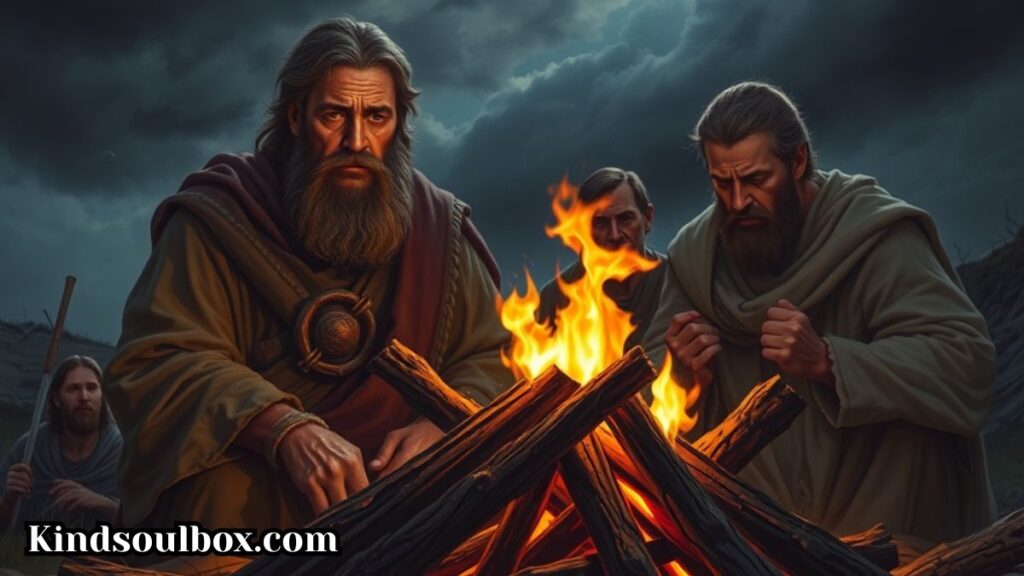
The deaths of King Saul and his sons present Scripture’s closest parallel to intentional cremation as a funeral practice. Yet even this account reveals significant differences from choosing cremation today.
The Tragic Battle
1 Samuel 31 records Israel’s devastating defeat by the Philistines on Mount Gilboa. King Saul and three sons—Jonathan, Abinadab, and Malchishua—perished in battle. The Philistines discovered Saul’s body, beheaded him, and displayed his corpse alongside his sons’ bodies on the walls of Bethshan.
This desecration served multiple purposes: humiliating Israel’s fallen king, terrifying the population, and demonstrating Philistine dominance. Bodies exposed on walls decomposed publicly—the ultimate disgrace in ancient Near Eastern culture.
The Men of Jabesh-Gilead
Enter the brave men of Jabesh-Gilead, who remembered King Saul’s earlier rescue of their city (1 Samuel 11). “And when the inhabitants of Jabesh-gilead heard of that which the Philistines had done to Saul, all the valiant men arose, and went all night, and took the body of Saul and the bodies of his sons from the wall of Beth-shan, and came to Jabesh, and burnt them there” (1 Samuel 31:11-12).
Why did they burn the bodies? Several theories exist:
Advanced decomposition: Days exposed in Mediterranean heat accelerated decay. Transporting decomposing remains over a distance would prove difficult.
Preventing further desecration: Cremation ensured the Philistines couldn’t recapture and further abuse the bodies.
Emergency circumstances: Warfare conditions sometimes necessitated immediate body disposal to prevent disease.
Partial cremation: The text clarifies they burned the flesh but buried the bones: “And they took their bones, and buried them under a tree at Jabesh, and fasted seven days” (1 Samuel 31:13).
Was This Approved by God?
Significantly, Scripture records no divine condemnation. David, God’s anointed successor, actually commended the men: “And David said unto the messengers…Blessed be ye of the LORD, that ye have shewed this kindness unto your lord, even unto Saul, and have buried him” (2 Samuel 2:5).
David called it “burial” despite the burning, suggesting the partial cremation fell within acceptable emergency measures. The key factors distinguishing this from condemned burnings include:
- Honorable intent (rescuing from enemies, not punishment)
- Proper mourning (fasting for seven days)
- Burial of the remaining bones
- David’s approval as God’s spokesman
This account demonstrates that while burial remained normative, extreme circumstances might justify burning bodies without incurring divine displeasure. Context and intent mattered tremendously in evaluating the burning of bodies.
“Burnings” for Kings: Honor, Not Cremation
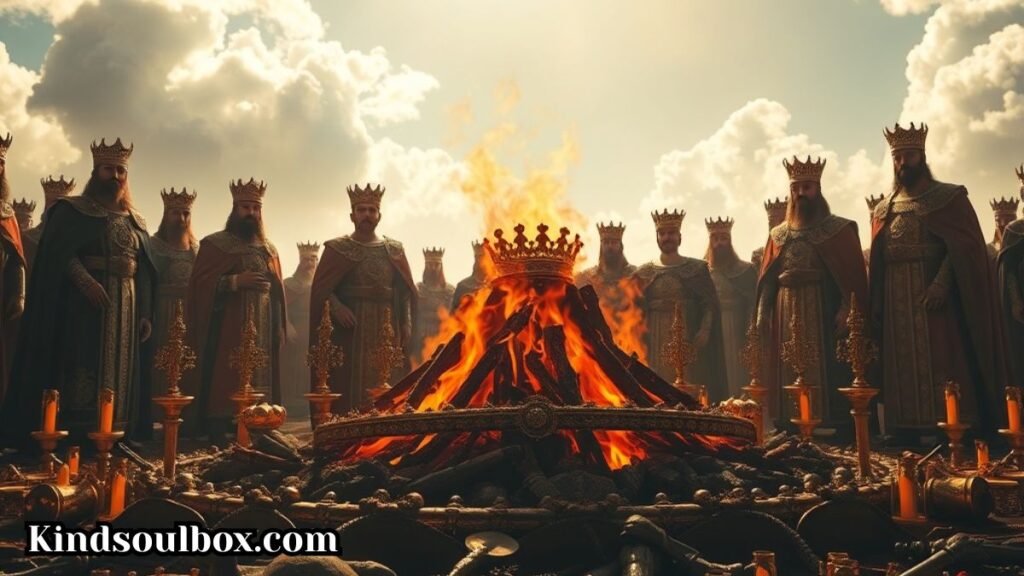
Two Chronicles passages mention “burnings” associated with royal deaths, confusing whether cremation occurred. Close examination reveals these honored deceased kings through ceremonial fires, not bodily cremation.
Good King Asa
2 Chronicles 16:14 describes King Asa’s funeral: “And they buried him in his own sepulchres, which he had made for himself in the city of David, and laid him in the bed which was filled with sweet odours and divers kinds of spices prepared by the apothecaries’ art: and they made a very great burning for him.”
The sequence matters: first burial in his tomb, then a “very great burning.” Scholars universally agree this describes burning spices, incense, and possibly possessions—not the king’s body.
Evidence this wasn’t cremation:
- Explicit mention of burial first
- Reference to “sweet odours” and “spices.”
- No contradiction to established Jewish burial practices
- Similar honors were described for other righteous kings
This ceremonial burning paralleled modern customs of using incense at funerals or creating memorial fires. The practice honored the deceased without consuming the body itself.
Evil King Jehoram
The contrast with King Jehoram proves instructive. 2 Chronicles 21:19 records: “And it came to pass, that in process of time, after the end of two years, his bowels fell out by reason of his sickness: so he died of sore diseases. And his people made no burning for him, like the burning of his fathers.”
King Jehoram suffered a dishonorable death because of his wickedness. Significantly, the text emphasizes no burning was made for him—a deliberate withholding of honor given to previous kings.
This confirms the “burnings” were ceremonial honors, not cremation. If the practice involved burning bodies, why would withholding it constitute punishment? The disgrace came from denying customary funeral honors, not from avoiding cremation.
Table: Royal Burnings in Chronicles
| King | Righteous? | Burial | Burning Made? | Significance |
|---|---|---|---|---|
| Asa | Yes | Yes, in City of David | Very great | Honor for righteousness |
| Jehoram | No | Yes | None | Denied honor as punishment |
The parallel structure demonstrates that “burnings” represented tribute and respect, distinguishing honorable vs ignoble death through ceremonial practices rather than body disposal methods.
Cremation as Punishment in Mosaic Law
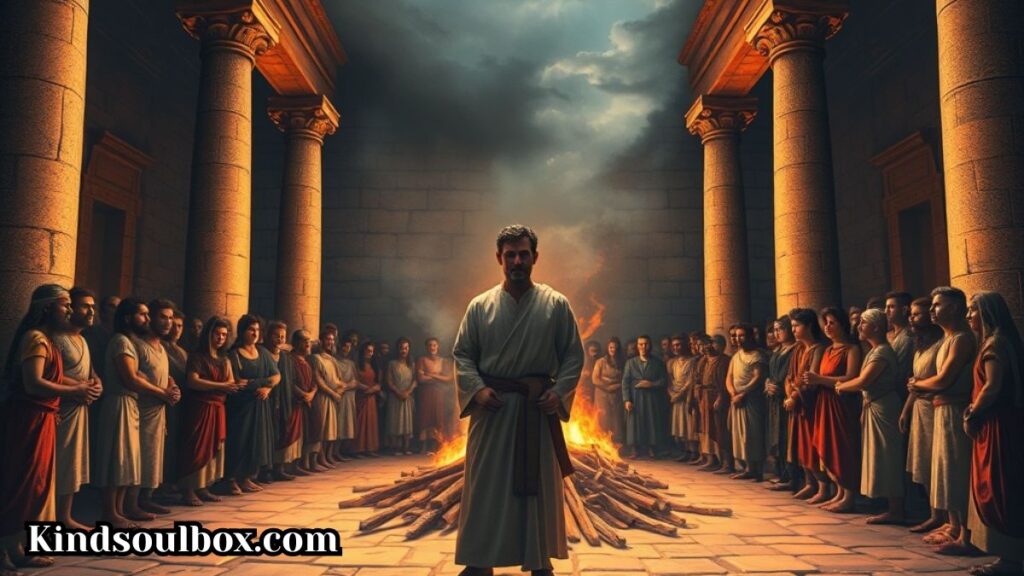
The Old Testament explicitly prescribes burning with fire as punishment for specific grave sins. These laws reveal how ancient Israelites understood fire’s theological significance.
Crimes Requiring Burning
Leviticus details several offenses warranting death by fire:
Sexual immorality: “And if a man take a wife and her mother, it is wickedness: they shall be burnt with fire, both he and they; that there be no wickedness among you” (Leviticus 20:14).
Priestly disgrace: “And the daughter of any priest, if she profane herself by playing the whore, she profaneth her father: she shall be burnt with fire” (Leviticus 21:9).
Taking devoted things: As seen with Achan, stealing items devoted to God warranted stoning and burning (Joshua 7:15).
Theological Meaning
Why did God prescribe burning for these particular sins? Several theological themes emerge:
Destruction: Fire consumed both body and legacy, preventing memorial or ongoing contamination.
Purification symbolism: Fire represented God’s holiness purging wickedness from the community.
Severity demonstration: Burning intensified execution, showing the heinousness of certain sins.
Deterrent effect: The horror of burning discouraged others from similar rebellion.
The prophetic book of Jeremiah connects this earthly judgment by fire to eternal punishment: concepts of Gehenna (valley of Hinnom) and ultimate judgment developed from this theological foundation.
This context explains why Jews and early Christians avoided cremation. The practice carried associations with divine judgment and punishment rather than honor for the deceased. While modern believers understand cremation differently, appreciating this historical context enriches biblical interpretation.
Idolatry and Child Sacrifice: The Darkest Burnings
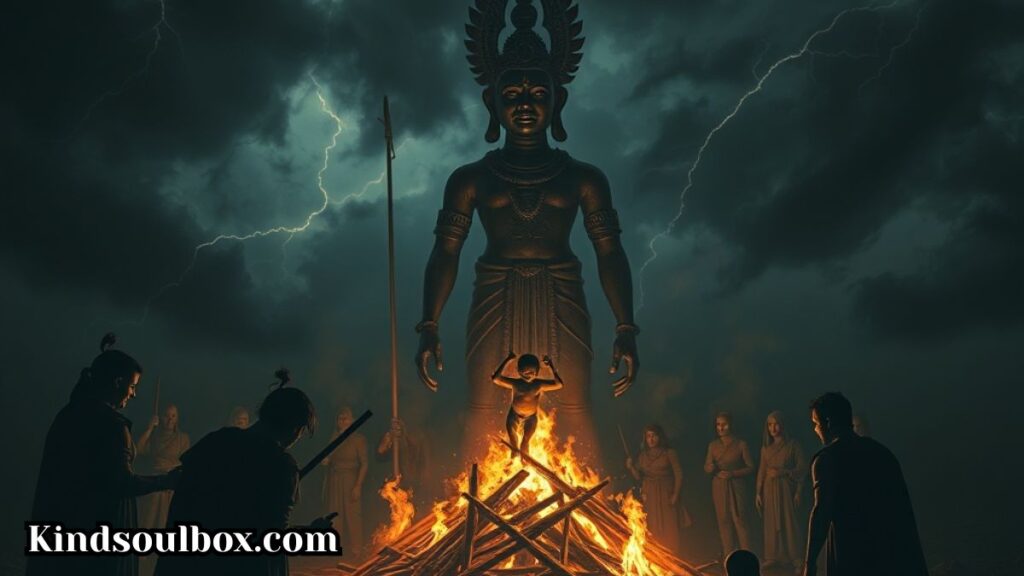
Perhaps Scripture’s most disturbing references to burning involve pagan child sacrifice—practices God vehemently condemned, yet some Israelite kings horrifically adopted.
Divine Prohibitions
God explicitly forbade child sacrifice multiple times:
Leviticus 18:21: “And thou shalt not let any of thy seed pass through the fire to Molech, neither shalt thou profane the name of thy God: I am the LORD.”
Deuteronomy 18:10: “There shall not be found among you any one that maketh his son or his daughter to pass through the fire, or that useth divination, or an observer of times, or an enchanter, or a witch.”
The phrase “pass through the fire” described horrific rituals where children were burned alive as offerings to false gods, particularly Molech. Heathen nations surrounding Israel practiced this abomination, and God commanded absolute separation from such wickedness.
Deuteronomy 12:31 reveals God’s revulsion: “Thou shalt not do so unto the LORD thy God: for every abomination to the LORD, which he hateth, have they done unto their gods; for even their sons and their daughters they have burnt in the fire to their gods.”
Israelite Kings Who Sinned
Tragically, some Israelite rulers embraced these detestable practices:
King Ahaz: “Moreover, he burnt incense in the valley of the son of Hinnom, and burnt his children in the fire, after the abominations of the heathen whom the LORD had cast out before the children of Israel” (2 Chronicles 28:3).
King Manasseh: “And he made his son pass through the fire, and observed times, and used enchantments, and dealt with familiar spirits and wizards: he wrought much wickedness in the sight of the LORD, to provoke him to anger” (2 Kings 21:6).
These kings sacrificed their own children in the Valley of the Son of Hinnom, establishing worship sites for Molech and Baal. The location became synonymous with abomination and later provided imagery for Gehenna (hell) in New Testament teaching.
Jeremiah’s Lament
The Prophet Jeremiah mourned these evil practices extensively:
Jeremiah 19:5: “They have built also the high places of Baal, to burn their sons with fire for burnt offerings unto Baal, which I commanded not, nor spake it, neither came it into my mind.”
Jeremiah 32:35: “And they built the high places of Baal, which are in the valley of the son of Hinnom, to cause their sons and their daughters to pass through the fire unto Molech; which I commanded them not, neither came it into my mind, that they should do this abomination, to cause Judah to sin.”
God’s phrase “neither came it into my mind” powerfully communicates His complete repudiation. The practice wasn’t merely forbidden—it was so contrary to His nature that He never even conceived such horror.
Implications for Cremation Discussion
Why discuss child sacrifice in an article about cremation? Because this historical context profoundly shaped Jewish attitudes toward burning bodies:
Cultural association: Fire became linked with pagan idolatry and abomination.
Theological revulsion: Burning bodies carried associations with wickedness and judgment.
Protective separation: Avoiding cremation distinguished God’s people from heathen nations.
Sacred respect: The body’s sanctity as God’s image-bearer demanded different treatment.
This doesn’t mean modern cremation equals child sacrifice—obviously not. But understanding why ancient Hebrew burial customs so strongly favored burial over burning helps us appreciate the biblical worldview.
Contemporary Christians deciding between burial vs cremation can distinguish modern practices from ancient abominations while still honoring the theological principles underlying biblical preferences.
New Testament Evidence: Burial Remains Normative
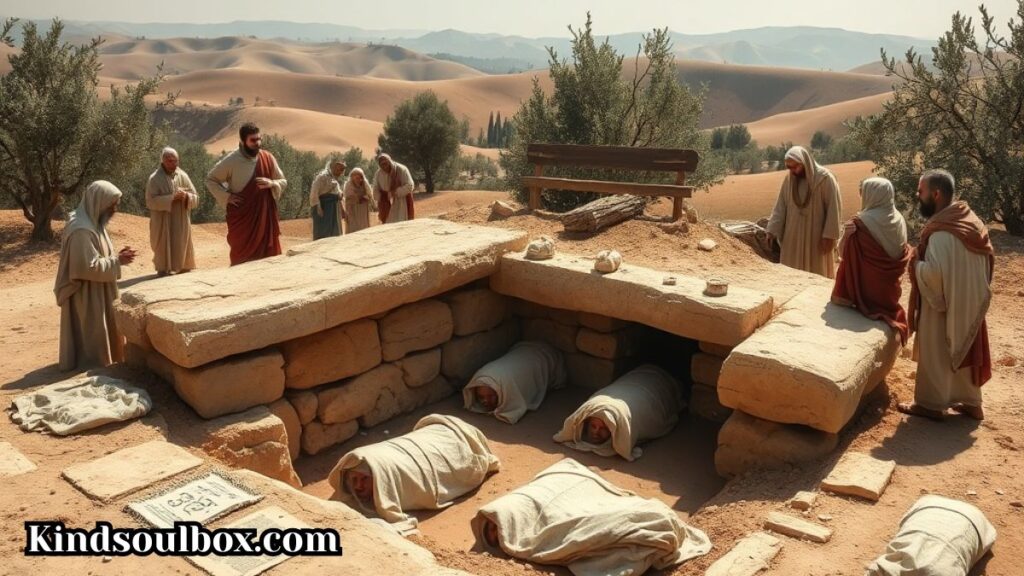
The New Testament continues Old Testament burial traditions without deviation. Every mentioned death includes burial, reinforcing the practice as standard for God’s people.
John the Baptist
Matthew 14:12 records: “And his disciples came, and took up the body, and buried it, and went and told Jesus.”
Despite John’s execution under King Herod and the disciples’ grief, they retrieved his body for proper burial. No consideration of cremation appears, even though John died violently, and circumstances might have complicated burial.
Ananias and Sapphira
Acts 5:6, 9-10 describes the sudden deaths of Ananias and Sapphira for lying to the Holy Spirit:
“And the young men arose, wound him up, and carried him out, and buried him…Then she fell straightway at his feet, and yielded up the ghost: and the young men came in, and found her dead, and, carrying her forth, buried her by her husband.”
Even in cases of divine judgment within the Christian community, burial occurred immediately. The young men wrapped the bodies (traditional Jewish preparation) and interred them properly.
This account particularly matters because Ananias and Sapphira died under judgment—circumstances that in the Old Testament sometimes involved burning. Yet early Christians maintained burial practices regardless.
Stephen, First Christian Martyr
Acts 8:2 records: “And devout men carried Stephen to his burial, and made great lamentation over him.”
Stephen’s martyrdom—stoned for proclaiming Christ—inaugurated Christian persecution. His death paralleled Old Testament stonings, yet devout believers carefully buried him with appropriate mourning.
The “great lamentation” indicates proper funeral rites honoring the deceased. Early Christians clearly valued burial as expressing faith and hope in bodily resurrection.
Jesus Christ’s Burial
The most theologically significant burial in Scripture belongs to Jesus Christ Himself. All four Gospels detail His interment:
Matthew 27:57-60 records Joseph of Arimathea requesting Jesus’ body from Pilate: “And when Joseph had taken the body, he wrapped it in a clean linen cloth, and laid it in his own new tomb, which he had hewn out in the rock.”
Jesus’ burial wasn’t incidental—it’s foundational to Christian theology. Paul’s gospel summary in 1 Corinthians 15:3-4 emphasizes: “For I delivered unto you first of all that which I also received, how that Christ died for our sins according to the scriptures; And that he was buried, and that he rose again the third day according to the scriptures.”
The burial validates both Jesus’ death (He truly died) and resurrection (He physically rose). An empty tomb demonstrates victory over death. Cremation would eliminate this crucial evidence.
Following Jesus’ example, burial became standard Christian practice, expressing theological convictions about body and soul after death and resurrection of the dead.
Resurrection Theology and Burial Practices
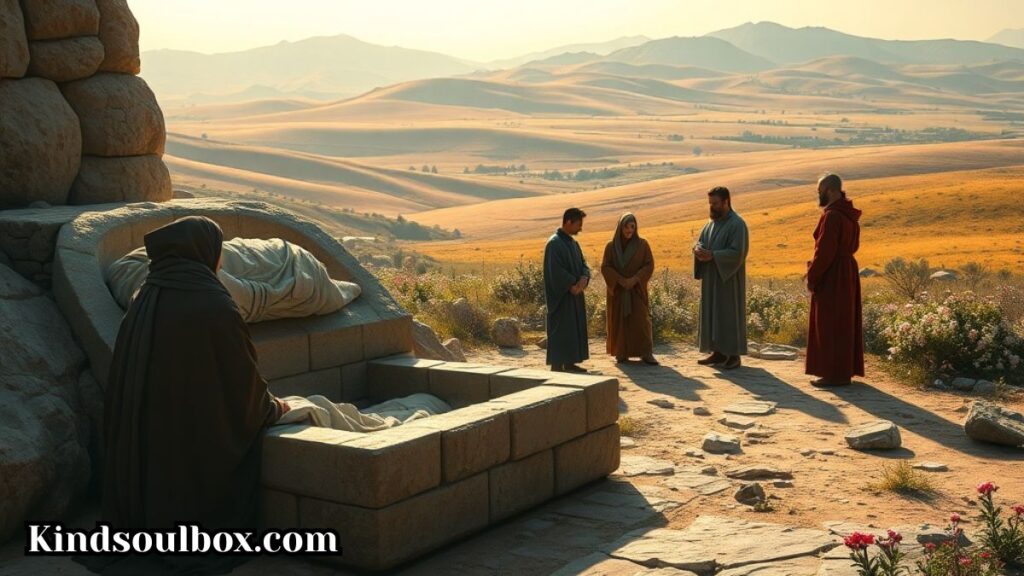
Understanding why Jews and early Christians consistently practiced burial requires examining biblical doctrine concerning bodily resurrection.
Old Testament Resurrection Hope
While less developed than New Testament teaching, the Old Testament contains clear resurrection promises:
Job 19:25-27: “For I know that my redeemer liveth, and that he shall stand at the latter day upon the earth: And though after my skin worms destroy this body, yet in my flesh shall I see God.”
Daniel 12:2: “And many of them that sleep in the dust of the earth shall awake, some to everlasting life, and some to shame and everlasting contempt.”
These passages establish that physical bodies, though decomposed, will be raised. The hope of resurrection influenced burial practices—placing bodies carefully in tombs reflected faith and hope in future restoration.
New Testament Resurrection Teaching
Jesus and the apostles extensively taught bodily resurrection:
1 Corinthians 15 dedicates an entire chapter to the resurrection of the body. Paul argues that Christ’s physical resurrection guarantees believers’ future resurrection: “But now is Christ risen from the dead, and become the firstfruits of them that slept” (verse 20).
1 Peter 1:3-4 celebrates this hope: “Blessed be the God and Father of our Lord Jesus Christ, who, according to his abundant mercy, hath begotten us again unto a lively hope by the resurrection of Jesus Christ from the dead, To an inheritance incorruptible, and undefiled, and that fadeth not away, reserved in heaven for you.”
Why Burial Expressed Faith
Early Christian burial practices demonstrated theological convictions:
Respect for God’s creation: The body bore God’s image and housed the Holy Spirit during life.
Testimony of faith: Careful burial proclaimed belief in future resurrection.
Following Christ’s example, Jesus’ burial and resurrection established the pattern.
Hope of reunion: Burial expressed confidence that death wasn’t final.
The Roman practice of cremation actually increased Christian commitment to burial. Distinguishing themselves from pagan culture, Christians created catacombs—underground burial chambers accommodating thousands—demonstrating their resurrection convictions through physical practice.
Does God Oppose Cremation Today?
Having examined biblical instances of burning bodies, we arrive at the practical question: Does God oppose modern cremation for Christians?
No Explicit Command
Scripture never directly commands “Thou shalt not cremate.” The consistent biblical pattern favors burial, but no verse explicitly forbids cremation as an option for believers today.
This silence matters. God exhaustively detailed acceptable and forbidden practices in Leviticus and Deuteronomy. Had cremation been inherently sinful, Scripture would likely address it explicitly.
Changed Circumstances
Several factors distinguish modern cremation from biblical burnings:
Intent: Today’s cremation serves practical purposes, not punishment or judgment.
Cultural meaning: Modern cremation lacks associations with idolatry or abomination.
Technological control: Contemporary cremation differs dramatically from ancient pyre burning.
Believer’s choice: Families select cremation as a funeral practice, not as an imposed disgrace.
God’s Resurrection Power
A crucial theological principle: God can resurrect any body regardless of condition. Consider:
Martyrs burned at the stake: Countless faithful Christians died by fire during persecutions. Their method of death doesn’t prevent resurrection.
Natural decomposition: Buried bodies eventually return to dust anyway—cremation simply accelerates natural processes.
Lost at sea: Sailors drowned and consumed by sea creatures still participate in resurrection.
Destruction: Even bodies destroyed in explosions, disasters, or other catastrophes will be raised.
1 Corinthians 15:42-44 explains: “So also is the resurrection of the dead. It is sown in corruption; it is raised in incorruption: It is sown in dishonour; it is raised in glory: it is sown in weakness; it is raised in power: It is sown a natural body; it is raised a spiritual body.”
God creates new resurrection bodies—glorified, imperishable, powerful. The condition of earthly remains doesn’t limit His creative power.
Principles for Decision-Making
Christians deciding about cremation should consider biblical principles rather than seeking explicit commands:
Honor the body: 1 Corinthians 6:19-20 reminds us: “What? know ye not that your body is the temple of the Holy Ghost which is in you, which ye have of God, and ye are not your own? For ye are bought with a price: therefore glorify God in your body, and in your spirit, which are God’s.”
Both burial and cremation can honor the body when done respectfully. The key is treating remains with dignity befitting God’s creation.
Conscience and liberty: Romans 14:5-6 addresses matters not explicitly commanded: “One man esteemeth one day above another: another esteemeth every day alike. Let every man be fully persuaded in his own mind. He that regardeth the day, regardeth it unto the Lord; and he that regardeth not the day, to the Lord he doth not regard it.”
Paul’s principle applies: issues not directly addressed in Scripture fall under Christian liberty. Believers can differ on burial vs cremation without sinning, provided their choice honors God.
Witness to others: Does your choice communicate Christian values? In cultures where cremation carries negative associations (remaining taboo or linked with paganism), burial might better testify to resurrection hope. In cultures where cremation is neutral or common, it may not undermine testimony of faith.
Practical considerations: Christians may legitimately weigh factors like cost, environmental impact, family preferences, and geographic limitations. Faith and hope in resurrection transcend the disposal method.
Biblical Principles for Christians Deciding Today
Rather than rigid rules, Scripture provides principles guiding Christians through end-of-life planning decisions:
Principle 1: Glorify God
Ecclesiastes reminds us: “Let us hear the conclusion of the whole matter: Fear God, and keep his commandments: for this is the whole duty of man” (12:13).
Whether choosing burial or cremation, prioritize glorifying God. Ask: Does this choice reflect my faith? Will it honor God’s work in my life? Can it serve as testimony to His power?
Principle 2: Exercise Christian Liberty Responsibly
Paul writes in 1 Corinthians 10:31: “Whether therefore ye eat, or drink, or whatsoever ye do, do all to the glory of God.”
Matters of personal choice in burial practices fall under Christian liberty—but liberty always operates within boundaries of love and wisdom. Consider how your decision affects family, church community, and witness to unbelievers.
Principle 3: Respect Cultural Context
The apostles adapted practices to cultural contexts while maintaining theological integrity. Paul became “all things to all men” (1 Corinthians 9:22) to win some to Christ.
If you live where cremation deeply offends cultural sensibilities, burial might better serve gospel witness. If cremation is widely accepted and neutral, free will allows that choice.
Principle 4: Communicate Resurrection Hope
The Christian funeral primarily testifies to the hope of resurrection. 1 Thessalonians 4:13-14 encourages: “But I would not have you to be ignorant, brethren, concerning them which are asleep, that ye sorrow not, even as others which have no hope. For if we believe that Jesus died and rose again, even so they also who sleep in Jesus will God bring with him.”
Whether through burial or cremation, ensure funeral arrangements proclaim this hope. The method matters less than the message.
Principle 5: Follow Jesus’ Example
Ultimately, Christians pattern their lives after Christ. 1 Peter 2:21 reminds us: “For even hereunto were ye called: because Christ also suffered for us, leaving us an example, that ye should follow his steps.”
Jesus’ burial provides a pattern, though not necessarily a command. His willing submission to death, provision for His mother, concern for others, and confidence in resurrection offer more crucial lessons than burial method alone.
Conclusion
Who was the first person cremated in the Bible remains surprisingly unclear. Who Was the First Person Cremated in the Bible? Achan suffered burning as punishment. Who Was the First Person Cremated in the Bible? King Saul’s body burned under emergency conditions. Sodom’s people experienced divine fire. Who Was the First Person Cremated in the Bible? None represents cremation as we know it today. Who Was the First Person Cremated in the Bible? Biblical burning carried weight—judgment, disgrace, or desperate necessity—not a peaceful funeral choice. Who Was the First Person Cremated in the Bible
Understanding who was the first person cremated in the Bible matters less than grasping Scripture’s message. Who Was the First Person Cremated in the Bible? God values our bodies as His creation. Who Was the First Person Cremated in the Bible? Resurrection power transcends disposal methods. Who Was the First Person Cremated in the Bible? Whether you choose burial or cremation today, focus on living a faithful life. Who Was the First Person Cremated in the Bible? Death’s not the end—resurrection hope through Jesus Christ conquers every grave. Who Was the First Person Cremated in the Bible
FAQs
Was cremation a common practice in biblical times?
No. Ancient Israelites consistently practiced burial in tombs or graves. Cremation remained rare and typically occurred only as punishment, divine judgment, or wartime emergency.
Did God punish people who were cremated in the Bible?
Burning usually served as the punishment itself, not a consequence. Achan was burned after being stoned for stealing devoted items. However, King Saul’s burning brought no condemnation from God or David.
Why do most Christians today choose burial over cremation?
Many follow biblical patterns and Jesus’ example. However, cremation rates among Christians have risen significantly—about 60% of Americans now choose cremation due to cost, environmental concerns, and changing cultural views.
Can cremated Christians still experience bodily resurrection?
Yes, absolutely. God’s resurrection power isn’t limited by body condition. Martyrs burned at the stake, bodies lost at sea, or naturally decomposed all participate in resurrection through Christ’s power.
What did Jesus teach about cremation versus burial?
Jesus never directly addressed cremation. He was buried in a tomb, establishing the pattern early Christians followed. His focus remained on spiritual readiness and resurrection hope rather than disposal methods.