What does the number 1 mean in the Bible? It represents divine unity, exclusivity, and supremacy—revealing God’s singular nature, Christ’s unique authority, and the unified purpose threading through all Scripture. What Does the Number 1 Mean in the Bible? This number appears at creation’s dawn, marks covenant moments, and defines the path of salvation.
Every “first” in Scripture carries weight. From Genesis day one to Revelation’s final declarations, the number 1 signals new beginnings, absolute truth, and God’s unchanging character. It’s not a coincidence—it’s divine design. What Does the Number 1 Mean in the Bible?
These 15 facts expose how biblical numerology unveils profound truths about monotheism, Christ’s exclusive claims as Mediator, and believers’ call to spiritual unity. What Does the Number 1 Mean in the Bible? What the number 1 means in the Bible transforms how you understand God’s Word, worship, and eternal purpose through the only begotten Son.
The Foundation: God’s Oneness
The Shema—Israel’s Central Confession
“Hear, O Israel: The LORD our God, the LORD is one” (Deuteronomy 6:4).
These words form the bedrock of Jewish faith. Known as the Shema (from the Hebrew word for “hear”), this declaration revolutionized ancient theology. While surrounding nations worshiped pantheons of competing deities, Israel proclaimed allegiance to one God.
The Hebrew text uses “echad”—a word denoting unified oneness. This isn’t merely a numerical singularity. It describes composite unity, like when Genesis 2:24 says partners become “one flesh.” The same word. The same concept of unified purpose and being.
Moses didn’t just deliver a philosophical statement. He established the foundation for understanding God’s character. Monotheism wasn’t common in the ancient Near East. Egypt worshiped Ra, Osiris, and Isis. Babylon had Marduk and Ishtar. Canaan served Baal and Asherah.
But God’s people served one Lord. Period.
This exclusivity carries implications we can’t ignore. Deuteronomy 6:14 immediately follows with a warning: “Do not follow other gods, the gods of the peoples around you.” Unity of God demands exclusive worship. You can’t hedge your bets with multiple deities when there’s only one God who created everything.
Augustine, the influential early church theologian, wrote extensively about divine simplicity—the idea that God isn’t composed of parts but exists as a perfect, unified being. This theological concept stems directly from Scripture’s insistence on God’s oneness.
The Trinity—Father, Son, and Holy Spirit—doesn’t contradict this oneness. Instead, it reveals the complexity within divine unity. Three persons, one God. The same unified essence is expressed in distinct persons.
One Creator, One Authority
“In the beginning God created the heavens and the earth” (Genesis 1:1).
Notice what’s missing? Committees. Councils. Divine debates.
One Creator speaks. Reality obeys.
Biblical symbolism of numbers begins at creation. Day one (not “the first day” as many translations render it—the Hebrew literally says “day one”) establishes the pattern. Light separates from darkness. Order emerges from chaos. And a singular, sovereign God orchestrates it all.
Genesis 1:9 shows God gathering waters into one place. Even the physical world reflects unified design. Not scattered, chaotic puddles—but purposeful, ordered creation under divine authority.
The ancient Israelites lived surrounded by polytheistic cultures where creation myths featured cosmic battles between gods. The Babylonian Enuma Elish depicts Marduk slaying Tiamat and forming the world from her corpse. Egyptian myths involve multiple deities crafting different aspects of reality.
Scripture presents something radically different. No divine conflict. No cosmic power struggle. Just one God speaking everything into existence.
This matters practically. If multiple gods created the world, which one do you obey when their demands conflict? But with one Creator, moral authority becomes clear. The God who made everything gets to define how everything works.
Divine order flows from divine singularity. Romans 1:20 tells us God’s invisible qualities—His eternal power and divine nature—have been clearly seen from creation. That unified design points to a unified Designer.
Unity in God’s Design

Marriage: Two Become One Flesh
“Therefore a man shall leave his father and mother and be joined to his wife, and they shall become one flesh” (Genesis 2:24).
Here’s where the number 1 gets deeply personal. God didn’t design marriage as a business partnership or roommate arrangement. He created a covenant where two distinct individuals form a unified whole.
Jesus Christ reinforced this in Matthew 19:5-6, quoting Genesis and adding, “So then, they are no longer two but one flesh. Therefore, what God has joined together, let not man separate.” The Savior Himself affirmed the spiritual meaning of number one in marriage.
1 Corinthians 6:16 goes even further, warning that sexual union creates a one-flesh bond even outside marriage. Paul quotes Genesis to show that the physical act carries spiritual weight. You can’t separate body from soul in God’s design.
But marriage symbolizes something even greater. Ephesians 4:4-6 reveals marriage as a picture of Christ and the Church. The marriage covenant reflects the relationship between the Messiah and His people. Just as partners become one flesh, believers unite with Christ in profound, mysterious ways.
This isn’t just poetic language. Biblical marriage demonstrates God’s desire for intimate, exclusive, permanent union with His people. The one flesh principle teaches us about covenant faithfulness, sacrificial love, and the beauty of two becoming one through God’s design.
One Body, Many Members
“For as the body is one and has many members, but all the members of that one body, being many, are one body, so also is Christ” (1 Corinthians 12:12).
Apostle Paul uses brilliant imagery here. Your body contains billions of cells, multiple organs, distinct systems—yet it functions as one unified organism. A hand doesn’t compete with a foot. Your liver doesn’t resent your heart.
Similarly, the Church operates as one body with diverse members. Different gifts. Varied callings. Unique personalities. Yet all serving the same Lord with the same Spirit for the same purpose.
Ephesians 4:4-6 drives this home with rhythmic repetition: “There is one body and one Spirit, just as you were called in one hope of your calling; one Lord, one faith, one baptism; one God and Father of all, who is above all, and through all, and in all.”
Count them. Seven uses of “one” in three verses. Paul isn’t being redundant—he’s emphasizing spiritual unity as Christianity’s defining characteristic.
But here’s the tension: unity doesn’t mean uniformity. The body metaphor reveals this beautifully. Eyes and ears function differently, yet neither is less valuable. Peter and Paul had distinct ministries, yet both served the same gospel.
Psalm 133:1 celebrates this: “Behold, how good and how pleasant it is for brethren to dwell together in unity!” The Hebrew word for “unity” here suggests harmony—different notes creating beautiful music together.
Contemporary churches often miss this. We fracture over minor disagreements, forgetting we’re parts of one body. Paul’s solution? Fix your eyes on Christ, the head of the body. When every member connects to Him, natural coordination follows.
One New Humanity
“For He Himself is our peace, who has made both one, and has broken down the middle wall of separation” (Ephesians 2:14).
In Paul’s day, a literal wall separated Jews from Gentiles in the temple. Gentiles could enter the Court of the Gentiles, but stone barriers with death-threat inscriptions warned them to go no further.
Christ demolished that wall. Not the physical stones—those remained until Rome destroyed the temple in 70 AD. But the spiritual barrier separates humanity into competing factions.
Ephesians 2:15-16 explains how: “having abolished in His flesh the enmity, that is, the law of commandments contained in ordinances, to create in Himself one new man from the two, thus making peace, and that He might reconcile them both to God in one body through the cross.”
This isn’t a theological abstraction. First-century churches wrestled with practical questions: Can Gentiles join without becoming Jews first? Do dietary laws still apply? What about circumcision?
The Jerusalem Council in Acts 15 addressed these tensions. The answer? Salvation comes through Christ alone, not ethnic identity or ceremonial law observance. Unity in faith transcends cultural divisions.
Galatians 3:28 makes the radical claim: “There is neither Jew nor Greek, there is neither slave nor free, there is neither male nor female; for you are all one in Christ Jesus.” Social hierarchies crumble before this truth.
Notice Paul doesn’t erase distinctions. Jews remain Jews. Greeks remain Greeks. But in Christ, these categories no longer determine spiritual standing or value. The ground at the cross is level.
This one new humanity principle addresses modern divisions, too. Race, nationality, economic class—none of these create spiritual castes in God’s kingdom. We’re one in the only way that eternally matters.
Jesus Christ: The Unique One
One Mediator Between God and Humanity
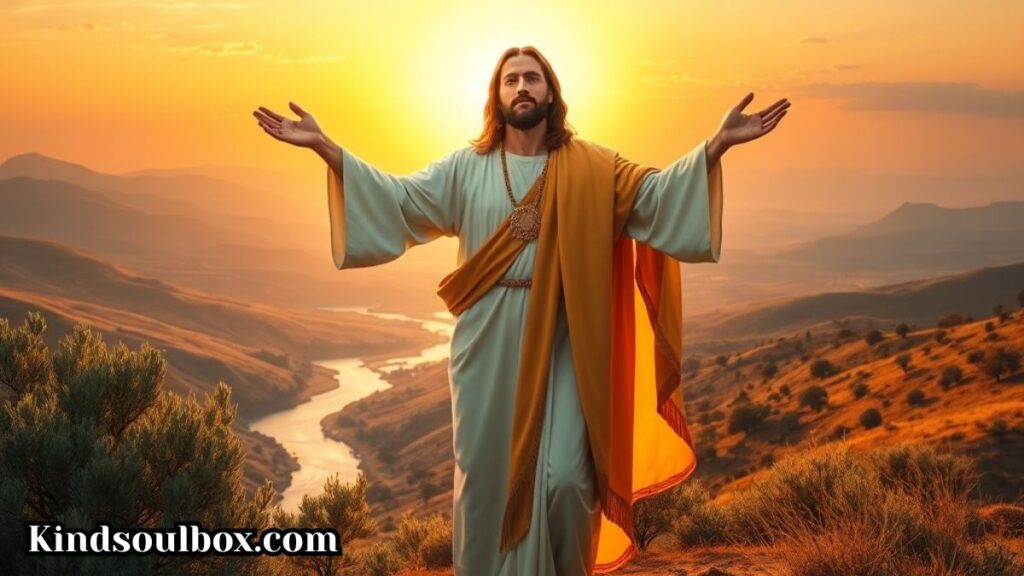
“For there is one God and one Mediator between God and men, the Man Christ Jesus” (1 Timothy 2:5).
Paul’s declaration leaves no wiggle room. Not multiple paths to God. Not various spiritual options. One Mediator.
A mediator bridges separation. Ancient mediators negotiated treaties between hostile nations or settlements between disputing parties. They stood in the gap, representing both sides to facilitate reconciliation.
Sin created a cosmic gap between the holy God and fallen humanity. We can’t bridge it ourselves. Religious rituals can’t span it. Good intentions fall short. Moral improvement doesn’t reach far enough.
We needed a mediator who could represent both sides—fully God and fully human. Jesus Christ of Nazareth uniquely qualifies. The Gospel of John opens by declaring, “The Word became flesh and dwelt among us” (John 1:14). God entered His creation, taking on human nature without abandoning divine nature.
Acts 4:10-12 reinforces this exclusivity: “Let it be known to you all, and to all the people of Israel, that by the name of Jesus Christ of Nazareth… Nor is there salvation in any other, for there is no other name under heaven given among men by which we must be saved.”
This offends modern sensibilities. We prefer inclusive options. Multiple valid paths. Religious pluralism.
But truth doesn’t bend to our preferences. If God declares one Mediator, claiming others exist doesn’t create them. It just leaves us clinging to false hope.
The Only Begotten Son
“For God so loved the world that He gave His only begotten Son, that whoever believes in Him should not perish but have everlasting life” (John 3:16).
That phrase “only begotten” translates the Greek “monogenes”—unique, one-of-a-kind. Not “only created” but “uniquely generated.” Christ shares the Father’s essence in a way no created being ever could.
1 John 4:9 reinforces this: “In this the love of God was manifested toward us, that God has sent His only begotten Son into the world, that we might live through Him.”
This distinguishes Jesus from believers. John 1:12 says those who receive Christ “became children of God.” We’re adopted children—brought into the family through grace. Christ is the eternal Son, never adopted, always belonging to the Father.
The distinction matters. Adopted children are inherited by grace. The natural son inherits by right. We receive eternal life as a gift. Christ possesses it inherently as the Life-giver Himself.
Early church councils fought fiercely over this. Arius taught that Christ was the first and greatest creation, but not co-eternal with the Father. The Council of Nicaea (325 AD) condemned this, affirming Christ as “begotten, not made, of one substance with the Father.”
Why does this matter practically? If Christ were merely a created being—even the greatest one—His death couldn’t atone for sin. Only infinite sacrifice covers infinite offense against an infinite God. The only begotten Son of God had the divine nature necessary to accomplish redemption.
The Seven “I Am” Statements
Jesus Christ made seven extraordinary claims in the Gospel of John, each using the definite article “the” rather than the indefinite “a.” He didn’t claim to be a way or a truth. He declared exclusivity with divine authority.
The Bread of Life
“I am the bread of life. He who comes to Me shall never hunger” (John 6:35).
After miraculously feeding five thousand, crowds sought Jesus for more free food. He redirected them: “Do not labor for the food which perishes, but for the food which endures to everlasting life” (John 6:27).
Then He made the stunning claim: “I am the living bread which came down from heaven. If anyone eats of this bread, he will live forever” (John 6:51).
Physical bread sustains temporarily. Jesus—the Bread of Life—satisfies eternally. Every human religion offers self-help programs: do this, avoid that, achieve enlightenment. Christ offers Himself as sustenance. We don’t work our way to God; we feed on Him.
The Light of the World
“I am the light of the world. He who follows Me shall not walk in darkness, but have the light of life” (John 8:12).
Darkness represents ignorance, sin, and death. Light symbolizes truth, holiness, and life. Jesus claimed to be the light—not one among many sources of illumination.
This echoes Genesis 1:3 when God said, “Let there be light.” The Creator of physical light now stands as humanity’s spiritual light. Without Him, we stumble in moral darkness, unable to see truth clearly.
Biblical symbolism of light versus darkness runs throughout Scripture. Psalm 119:105 says, “Your word is a lamp to my feet and a light to my path.” Christ embodies that living Word of God, illuminating the path to the Father.
The Door
“I am the door. If anyone enters by Me, he will be saved” (John 10:9).
Sheepfolds in ancient Israel had one opening. The shepherd literally lay across the entrance at night, making his body the door. No sheep exited without passing over him. No predator entered without going through him first.
Jesus positions Himself as the singular entrance to safety, provision, and a relationship with God. Not a door among many. Not one valid option in a religious buffet. The Door.
The Good Shepherd
“I am the good shepherd. The good shepherd gives His life for the sheep” (John 10:11).
Ancient shepherds led from the front, unlike modern ranchers who drive cattle from behind. Jesus doesn’t drive His followers with threats and manipulation. He leads with sacrificial love.
John 10:14-16 expands this: “I am the good shepherd; and I know My sheep, and am known by My own… And other sheep I have which are not of this fold; them also I must bring, and they will hear My voice; and there will be one flock and one shepherd.”
Notice the unity theme? One flock. One shepherd. The parable of the lost sheep (Matthew 18:12-14) shows God’s heart—leaving ninety-nine to pursue the wandering one. Every individual matters to the Good Shepherd.
The Resurrection and the Life
“I am the resurrection and the life. He who believes in Me, though he may die, he shall live” (John 11:25).
Jesus spoke these words before raising Lazarus from the dead. He didn’t say He could perform resurrections or knew someone who grants life. He claimed to be resurrection and life personified.
This statement demolishes death’s tyranny. If Christ is resurrection, death becomes a defeated enemy rather than an ultimate victor. His own resurrection three days after crucifixion validated this audacious claim.
The Way, The Truth, The Life
“I am the way, the truth, and the life. No one comes to the Father except through Me” (John 14:6).
Perhaps the most controversial statement in modern pluralistic culture. Jesus didn’t suggest He knew a way to God or taught some truth about divine reality. He claimed exclusive identity as all three.
The Way—not a moral system or philosophical path, but a Person.
The Truth—not just accurate information, but ultimate reality embodied.
The Life—not mere biological existence, but abundant, eternal life found in relationship with Him.
The phrase “no one comes to the Father except through Me” eliminates alternative routes. This isn’t arrogant exclusivity—it’s loving clarity. God doesn’t leave us guessing about salvation. He provides one Mediator and announces Him plainly.
The Vine
“I am the vine, you are the branches. He who abides in Me, and I in him, bears much fruit; for without Me you can do nothing” (John 15:5).
A branch severed from its vine withers and dies. It might look alive briefly, but without a connection to the life source, death is inevitable.
Jesus positions Himself as the life source for believers. Our spiritual vitality depends entirely on remaining connected to Him. We don’t generate our own righteousness or produce spiritual fruit through self-effort. Life flows from Christ to us.
This echoes the number 1 theme beautifully. One vine. Multiple branches, yes—but all drawing from the singular source. No branch has independent existence. All depend on remaining in the one Vine.
Calendrical and Covenantal Significance

The First Day: New Beginnings
“And God called the light Day, and the darkness He called Night. So the evening and the morning were the first day” (Genesis 1:5).
The Hebrew literally says “day one” rather than “the first day.” This subtle distinction matters. It’s not merely sequential numbering—it’s establishing one as the foundation.
Light didn’t exist on day zero. Darkness covered the formless void until God spoke. Day one marked the beginning of ordered creation, the transition from chaos to cosmos.
This pattern repeats throughout Scripture. New beginnings cluster around “firsts”—first days, first months, first moments of transition.
Jesus rose from death on the first day of the week (Matthew 28:1, Mark 16:2, Luke 24:1, John 20:1). All four Gospel writers emphasize this timing. The resurrection launched a new creation, just as day one launched the original creation.
Early Christians began meeting on the first day of the week to commemorate the resurrection (Acts 20:7, 1 Corinthians 16:2). Sunday worship replaced Saturday Sabbath observance, marking the transition from the old covenant to the new.
The symbolism is profound. Day one brought light. The resurrection of Christ—the Light of the World—brought eternal light to humanity. Day one initiated creation. Resurrection initiated a new creation in Christ.
The First Month, First Day—Israel’s Calendar
“This month shall be your beginning of months; it shall be the first month of the year to you” (Exodus 12:2).
God reset Israel’s calendar at the Passover. What was previously the seventh month became the first. Why? Because Passover marked national birth—redemption from Egyptian slavery and formation as God’s covenant people.
Exodus 40:2 records another significant first: “On the first day of the first month you shall set up the tabernacle of the tent of meeting.” The dwelling place of God among His people was erected on New Year’s Day—the ultimate new beginning.
Verse 17 confirms the timing: “And it came to pass in the first month of the second year, on the first day of the month, that the tabernacle was raised.” God’s presence would now dwell among Israel in visible, tangible form.
Leviticus 23:24 establishes another first: “Speak to the children of Israel, saying: ‘In the seventh month, on the first day of the month, you shall have a sabbath-rest, a memorial of blowing of trumpets, a holy convocation.'” This became Rosh Hashanah, the civil New Year, contrasting with Nisan as the religious New Year.
These “firsts” weren’t arbitrary. They marked covenant moments—times when God established or renewed His relationship with His people. The tabernacle becoming operational on the first day symbolized God’s initiation of dwelling with humanity. The pattern continues even to Revelation, where God declares, “Behold, I make all things new” (Revelation 21:5).
One Law for Native and Foreigner
“One law shall be for the native-born and for the stranger who dwells among you” (Exodus 12:49).
This principle appears repeatedly. Numbers 15:16 echoes it: “One law and one custom shall be for you and for the stranger who dwells with you.”
In the ancient Near East, this was revolutionary. Most societies had tiered legal systems—one standard for citizens, another for foreigners. Privileges correlated with ethnicity and social standing.
God’s law recognized no such hierarchy. The same moral standards applied to Israelites and resident aliens. The same civil justice protected both. the same religious requirements bound both.
This foreshadowed the New Testament breaking down walls between Jew and Gentile. God never intended ethnic exclusivity. Even Old Testament law made provision for outsiders to join God’s people through faith and obedience to His one law.
Ruth the Moabite exemplifies this. Born into a heathen nation, she declared to Naomi, “Your people shall be my people, and your God, my God” (Ruth 1:16). She submitted to Israel’s one law and became an ancestor of David—and ultimately of Jesus Christ.
Divine order demands unity under one standard. If multiple laws existed for different people groups, chaos would result. Who decides which law applies in mixed situations? God’s wisdom established one law reflecting His singular, unchanging character.
One Testament, One Story

One Unified Narrative
The Bible contains 66 books written by approximately 40 authors across 1,500 years in three languages (Hebrew, Aramaic, and Greek). Yet it tells one coherent story from Genesis to Revelation.
Matthew 1:1 begins the New Testament by connecting Jesus directly to Old Testament promises: “The book of the genealogy of Jesus Christ, the Son of David, the Son of Abraham.” The genealogy isn’t filler—it demonstrates continuity between old and new covenants.
Fulfilled prophecy binds the Testaments together. Isaiah 53 describes a suffering servant who “was wounded for our transgressions” and “by His stripes we are healed.” Written 700 years before Christ’s birth, it precisely predicts His atoning death.
Psalm 22 details crucifixion with eerie accuracy—”They pierced My hands and My feet” (verse 16)—though this form of execution didn’t exist when David wrote the psalm a thousand years before Rome invented it.
The thread of redemption runs from Genesis 3:15, where God promises Eve’s offspring will crush the serpent’s head, through Revelation 20, where Satan receives final judgment. Every book contributes to this unified narrative.
Divine inspiration explains this remarkable coherence. 2 Timothy 3:16 declares, “All Scripture is given by inspiration of God.” Human authors penned the words, but one divine Author orchestrated the message.
Preservation of Scripture across millennia further demonstrates God’s hand. The Dead Sea Scrolls, discovered in 1947, contained Old Testament texts 1,000 years older than previously known manuscripts. Comparison showed 95% agreement—mostly minor spelling variations. God preserved His Word with stunning accuracy.
Alpha and Omega—First and Last
“I am the Alpha and the Omega, the Beginning and the End, the First and the Last” (Revelation 22:13).
Jesus claims the first and last letters of the Greek alphabet—Alpha (Α) and Omega (Ω). These symbols bookend all possible words, representing totality and completeness.
Revelation 1:8 attributes this title to God: “I am the Alpha and the Omega, the Beginning and the End,” says the Lord, “who is and who was and who is to come, the Almighty.” By claiming this same title in chapter 22, Jesus asserts deity.
Revelation 21:6 repeats it: “I am the Alpha and Omega, the Beginning and the End. I will give of the fountain of the water of life freely to him who thirsts.” God offers salvation freely to all who recognize their thirst.
This imagery encompasses all history. Christ existed before creation (John 1:1) and will reign after this age ends (Revelation 21-22). He’s not merely present at the beginning and end—He defines them. Everything exists between His bookends.
The Alpha and Omega concept reinforces divine authority. If Christ controls history’s beginning and ending, He controls everything in between. No event catches Him by surprise. No development derails His plan.
Biblical symbolism often uses first/last imagery. Isaiah 44:6 declares, “I am the First, and I am the Last; besides Me there is no God.” Jesus appropriating this Old Testament divine title makes an unmistakable claim to deity.
The Singular Love of God

God’s Unique Love for His People
“For you are a holy people to the LORD your God; the LORD your God has chosen you to be a people for Himself, a special treasure above all the peoples on the face of the earth” (Deuteronomy 7:6).
God didn’t love Israel because they were numerous or powerful. Verse 7 clarifies: “The LORD did not set His love on you nor choose you because you were more in number than any other people, for you were the least of all peoples.”
He loved them because He chose to love them. Period.
This divine love wasn’t generic affection for humanity in general. It was specific, covenantal, pursuing love for a particular people. Deuteronomy 7:8 explains the motivation: “because the LORD loves you, and because He would keep the oath which He swore to your fathers.”
Romans 8:38-39 extends this truth to all believers: “For I am persuaded that neither death nor life, nor angels nor principalities nor powers, nor things present nor things to come, nor height nor depth, nor any other created thing, shall be able to separate us from the love of God which is in Christ Jesus our Lord.”
Count the items Paul lists: death, life, angels, principalities, powers, present things, future things, height, depth, and any created thing. Ten categories covering every conceivable threat. None can sever God’s love for His people.
This isn’t sentimental emotion. It’s covenant faithfulness. God binds Himself to His people with unbreakable commitment. When we’re faithless, He remains faithful (2 Timothy 2:13). When we wander, He pursues. when we fall, He restores.
The lost sheep parable (Matthew 18:12-14) illustrates this special love. The shepherd doesn’t shrug off the missing sheep: “Oh well, I’ve got ninety-nine others.” He leaves the flock to find the one lost lamb. Each matters infinitely to God.
One Hope, One Calling
“There is one body and one Spirit, just as you were called in one hope of your calling” (Ephesians 4:4).
Apostle Paul emphasizes the singularity of Christian hope. Not multiple potential outcomes. Not various paths to various destinations. One hope.
That hope? Eternal life in God’s presence through Christ. Resurrection of the body. New heavens and new earth where righteousness dwells. The return of Jesus to establish His kingdom fully and finally.
Philippians 3:14 expresses this focused pursuit: “I press toward the goal for the prize of the upward call of God in Christ Jesus.” Paul didn’t scatter his energy chasing multiple objectives. One calling consumed him—knowing Christ and becoming like Him.
This unity of purpose should characterize all believers. We’re not pursuing different gods with different plans. We serve the one God who calls us to one hope through one Savior. Whatever our individual callings (teacher, missionary, engineer, parent), they all serve this overarching purpose.
Matthew 23:8-10 warns against fragmentation: “But you, do not be called ‘Rabbi’; for One is your Teacher, the Christ, and you are all brethren. Do not call anyone on earth your father; for One is your Father, He who is in heaven. And do not be called teachers; for One is your Teacher, the Christ.”
Jesus forbids hierarchies that obscure our fundamental equality and shared calling under one Master. We’re fellow students in the same classroom, not competing scholars establishing rival schools.
The Power of One in Revelation

The New Jerusalem’s Unified Design
“The twelve gates were twelve pearls: each gate was of one pearl” (Revelation 21:21).
John’s vision of the New Jerusalem emphasizes unity even in the city’s structure. Each gate comprises one massive pearl—no composite construction, no assembly of smaller pieces. One pearl formed through suffering (pearls form when an oyster responds to irritation by coating the irritant with nacre).
These gates welcome the redeemed into eternal life. The twelve gates represent the twelve crews of Israel (Revelation 21:12), showing God’s faithfulness to His covenant people. But Revelation 21:14 adds “the wall of the city had twelve foundations, and on them were the names of the twelve apostles of the Lamb”—connecting Old Testament Israel with New Testament Church.
The city is “prepared as a bride adorned for her husband” (Revelation 21:2). This marriage imagery circles back to the one-flesh principle from Genesis. The eternal state features perfect union between God and His people—one in love, purpose, and presence forever.
Revelation 13:18 mentions another significant number: “Here is wisdom. Let him who has understanding calculate the number of the beast, for it is the number of a man: His number is 666.” While 666 represents imperfection and evil (falling short of 777, the number of divine perfection), its mention highlights the contrast with God’s perfect oneness.
Practical Application: Living the “One” Life
Understanding what the number 1 means in the Bible isn’t merely academic. These truths reshape how we live.
Worship one God exclusively. Modern culture offers countless idols—money, success, relationships, pleasure. What Does the Number 1 Mean in the Bible? The Shema calls us to singular devotion. Not “God first” among many priorities, but God as the one priority that orders everything else.
Pursue unity without uniformity. The one body metaphor shows diversity within unity. Don’t demand everyone look, think, or worship exactly like you. But do insist on the essentials: one Lord, one faith, one baptism.
Guard your marriage as one flesh. If married, remember your spouse isn’t your roommate or business partner. You’re one flesh under God. That demands sacrifice, forgiveness, and choosing unity over individual preferences.
Recognize Christ as the only way. This sounds harsh in a pluralistic culture, but loving clarity beats comfortable deception. Jesus didn’t offer one valid option among many. He claimed to be the Way, the Truth, and the Life. Either he’s right, or He’s deluded. No middle ground exists.
Live with unified purpose. Philippians 3:14 challenges us to press toward one goal. Don’t scatter your life across conflicting priorities. Find your calling under God’s overarching purpose and pursue it with laser focus.
Trust the one Mediator. Stop trying to earn salvation through religious performance. 1 Timothy 2:5 points to one Mediator—Jesus Christ. Rest in His finished work rather than your inadequate efforts.
Conclusion
What does the number 1 mean in the Bible? It reveals God’s unified character and exclusive truth. From one Creator to one Mediator, Scripture emphasizes divine singularity. What Does the Number 1 Mean in the Bible? These 15 facts show how the number 1 threads through every covenant, creation moment, and Christ’s claims. What Does the Number 1 Mean in the Bible? Unity isn’t optional—it’s foundational.
What the number 1 means in the Bible demands a response. One God calls for undivided worship. One Savior offers singular hope. What Does the Number 1 Mean in the Bible? One body pursues shared purpose. What Does the Number 1 Mean in the Bible? These aren’t abstract concepts—they’re life-altering truths. What Does the Number 1 Mean in the Bible? Embrace the one Lord who transformed eternity through His only begotten Son. Your decision defines everything.
FAQs
What does the number 1 symbolize in the Bible?
The number 1 represents God’s unity, exclusivity, and supremacy. It signifies one Creator, one Mediator, and the unified purpose of Scripture from Genesis to Revelation.
Why is monotheism important in biblical theology?
Monotheism—belief in one God—forms Christianity’s foundation through the Shema (Deuteronomy 6:4). It establishes exclusive worship, moral authority, and distinguishes biblical faith from polytheistic religions.
How does the number 1 relate to Jesus Christ?
Jesus is the only begotten Son (John 3:16), the one Mediator (1 Timothy 2:5), and claims exclusive identity through seven “I Am” statements. He’s the Way, not one option among many.
What does “one flesh” mean in biblical marriage?
One flesh (Genesis 2:24) describes marriage as a complete union—physically, spiritually, and emotionally. Jesus affirmed this in Matthew 19:5-6, making marriage a picture of Christ and the Church.
How should believers pursue unity according to Scripture?
Ephesians 4:4-6 emphasizes one body, one Spirit, one hope, one Lord, one faith, and one baptism. What Does the Number 1 Mean in the Bible? Believers pursue spiritual unity while maintaining diverse gifts and callings under Christ’s headship.