The Sienna name meaning in the Bible refers to the rich spiritual and symbolic connections between this warm, earth-rooted name and core biblical themes — particularly creation, clay, and divine craftsmanship — even though Sienna itself doesn’t appear in scripture.
Here’s the truth most articles won’t tell you: a name doesn’t need to be in the Bible to carry genuine biblical weight.
Sienna’s roots run straight into the reddish earth of Genesis, the potter’s clay of Isaiah, and the remarkable legacy of Saint Catherine of Siena — one of Christianity’s greatest theologians. Its spiritual significance, Hebrew parallels, and symbolic depth make it a profoundly meaningful choice for faith-driven families.
What Is the True Origin of the Name Sienna?
Before exploring its biblical meaning, you need to know where Sienna actually comes from.
The name is rooted in Siena, a medieval city in Tuscany, Italy, famous for its Gothic architecture, its annual horse race (the Palio), and — critically — its soil. The earth around Siena is rich in iron oxide and manganese, giving it a distinctive reddish-brown color that artists have used for centuries. That pigment, terra di Siena (earth of Siena), is where we get the color “sienna” — and eventually the name.
The Latin root is Senensis, meaning “of Siena.” Over time, especially in American and British English-speaking cultures, Siena evolved into Sienna as a given name — partly for aesthetic reasons, partly because the double-n spelling felt more natural in English phonetics.
Key origin facts:
| Detail | Information |
|---|---|
| Language of origin | Italian / Latin |
| Root word | Senensis (of Siena) |
| Geographic source | Siena, Tuscany, Italy |
| Literal meaning | Reddish-brown earth; of the city of Siena |
| First popular use as a given name | Late 20th century, English-speaking countries |
| Alternative spelling | Siena |
The name gained significant traction in the 1990s and 2000s, particularly in American culture, and has remained consistently popular ever since. It’s earthy, elegant, and easy to pronounce — a rare combination.
Is Sienna Actually in the Bible?

Let’s be direct: No. Sienna is not a biblical name.
It doesn’t appear in the Old Testament or the New Testament. No character, city, or concept in scripture goes by this name. If someone tells you otherwise, they’re stretching the truth.
But here’s what makes this conversation worth having: plenty of beloved names used by Christian families today don’t appear in the Bible either. Think about names like Aria, Luna, Scarlett, or Aurora. None of them are biblical names in the strict sense — yet they carry spiritual resonance for the families who choose them.
The distinction matters. There’s a real difference between:
- Biblical names — names directly from scripture (Hannah, Miriam, Elijah, Noah)
- Biblically inspired names — names whose meaning or symbolism aligns with biblical themes, even if the name itself isn’t in the text
Sienna falls firmly in the second category. And once you understand why, it becomes a genuinely rich name for a person of faith.
The Sienna Name Meaning in the Bible: Earth, Clay & Creation
Here’s where things get interesting. The biblical meaning of Sienna isn’t found in a verse that mentions the name — it’s found in the symbolism the name carries.
Sienna means reddish-brown earth. And earth — specifically the dust of the ground — sits at the very heart of the creation story.
“Then the Lord God formed a man from the dust of the ground and breathed into his nostrils the breath of life.” — Genesis 2:7
The Hebrew word used here for “ground” is adamah — red earth, clay-rich soil. The name Adam itself derives from adamah. So when you trace Sienna back to its root meaning of reddish, iron-rich earth, you’re touching the same symbolic territory as one of the most foundational moments in all of scripture: God forming humanity from the very ground beneath our feet.
That’s not a trivial connection.
Clay and the Potter: God’s Most Intimate Metaphor
The earth/clay symbolism runs even deeper through the prophetic books. God as the Master Potter shaping humanity like clay is one of the Bible‘s most enduring and intimate metaphors.
“We are the clay, you are the potter; we are all the work of your hand.” — Isaiah 64:8
“Like clay in the hand of the potter, so are you in my hand, Israel.” — Jeremiah 18:6
“Does not the potter have the right to make out of the same lump of clay some pottery for special purposes and some for common use?” — Romans 9:21
Each of these passages uses clay — the same reddish-brown earth that defines Sienna’s meaning — as a picture of divine purpose, transformation, and God’s grace. The moldable nature of clay speaks to humility, surrender, and trust in the Creator. It’s a picture of being shaped by something greater than yourself.
Biblical themes embedded in Sienna’s meaning:
- Groundedness — rooted in the earth, not swayed by what’s shallow
- Humility — formed from dust, dependent on God’s breath for life
- Transformation — clay is shaped, fired, and made beautiful through the process
- Authenticity — Earth doesn’t pretend to be anything other than what it is
- Strength — pottery made from good clay is remarkably durable
The Color Red in Biblical Symbolism
Sienna is also, at its core, a color name, and red carries enormous weight in biblical symbolism.
Red appears throughout scripture as a symbol of sacrifice, redemption, refinement, and the presence of God. The thread of scarlet in Rahab’s window. The fire of Pentecost. The refiner’s fire in Isaiah 48:10 (“I have refined you, though not as silver; I have tested you in the furnace of affliction”). The warm, deep reddish-brown of sienna sits within this broader palette of biblical metaphor — earthy and grounded, but shot through with life and warmth.
Hebrew Roots: What Does Sienna Mean in Hebrew?
Sienna has no direct Hebrew equivalent. But linguistically, the closest Hebrew concepts are:
| Hebrew Word | Transliteration | Meaning |
|---|---|---|
| אֲדָמָה | Adamah | Ground, red earth, soil |
| אָדֹם | Adom | Red |
| חֹמֶר | Chomer | Clay is a pottery material |
| עָפָר | Aphar | Dust, fine earth |
Hebrew naming traditions placed enormous weight on meaning. A name wasn’t just a label — it was a declaration about the person’s character, calling, or origin. When viewed through that lens, Sienna’s meaning aligns beautifully: a name rooted in adamah, the very substance God used to form humanity.
The Sienna Hebrew meaning, while indirect, connects to the bedrock concepts of creation, humility, and divine craftsmanship.
Sienna in Christian Spiritual Tradition: Saint Catherine of Siena
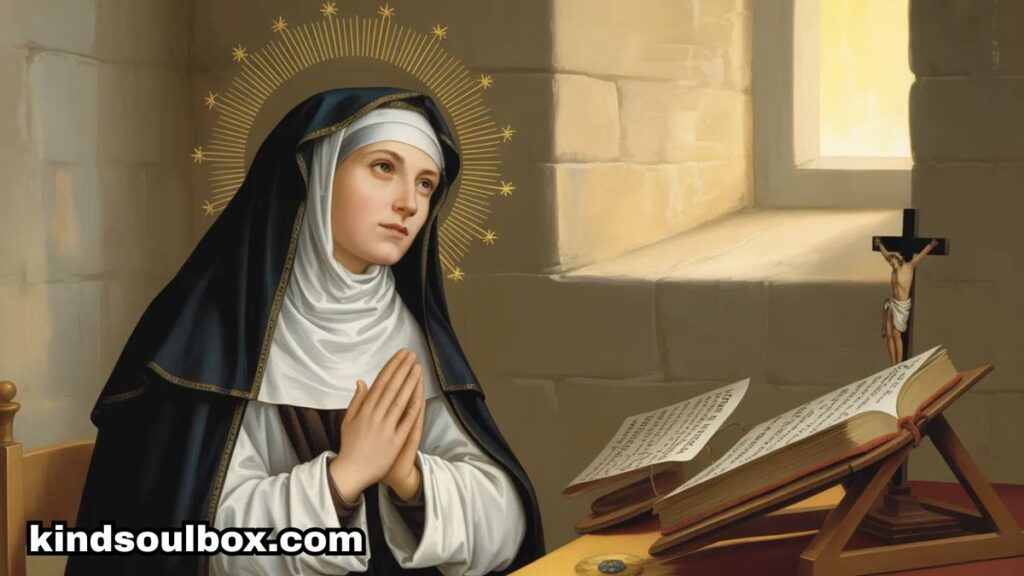
This is the most concrete and historically significant faith connection to the name Sienna — and it’s one that most articles completely overlook.
Saint Catherine of Siena (1347–1380) is one of the most remarkable figures in Christian history. Born in Siena, Italy, she became a mystic, theologian, and political activist who corresponded with popes, negotiated peace between warring Italian city-states, and wrote The Dialogue — a masterwork of Christian mysticism still read and studied today.
In 1970, Pope Paul VI declared her a Doctor of the Church — one of only four women ever to receive that title. She’s also a patron saint of Italy and of Europe.
“Be who God meant you to be and you will set the world on fire.” — Saint Catherine of Siena
For anyone named Sienna, this legacy is a genuine spiritual inheritance. The city that gave the name its origin also gave Christianity one of its greatest theologians. That’s not a coincidence you dismiss lightly.
Key facts about Saint Catherine of Siena:
- Born: March 25, 1347, Siena, Italy
- Died: April 29, 1380, Rome (aged 33)
- Feast Day: April 29
- Title: Doctor of the Church, Virgin, Mystic
- Major work: The Dialogue of Divine Providence
- Patron of: Italy, Europe, nurses, fire prevention
Sienna Arabic Name Meaning
In Arabic-speaking cultures, Sienna isn’t a traditional name but is used as an adapted transliteration: سيينا (Siyna or Siena). The name is recognized primarily for its Italian origin and is associated with the same meanings — warmth, earth, and natural beauty.
Some Arabic interpretations link the phonetic sound to concepts of brightness and clarity, though these are cultural associations rather than direct linguistic translations. Among Muslim and Christian communities in the Arab world, it’s used as a modern, international name with a warm, sophisticated feel.
Spiritual Themes Associated with Sienna
Whether or not you assign theological weight to a name, the themes embedded in Sienna’s meaning carry genuine spiritual significance.
Groundedness and Humility
Earth imagery runs throughout the Psalms and Proverbs as a metaphor for humility and stability. To be “grounded” in faith is to be rooted — not easily toppled by shifting winds. A person with a grounded spirit builds on a foundation of faith rather than on surface-level success.
Warmth and Nurturing
Sienna’s warm, reddish-brown tones evoke the quality of sunlit soil — fertile, life-giving, sustaining. In scripture, God’s care for people is frequently described in agricultural terms: tending, planting, watering. This warmth is a reflection of divine love made tangible.
Refinement and Resilience
Clay must be fired to become useful. The transformation process — pressure, heat, shaping — is central to what clay becomes. This mirrors the biblical theme of refinement through adversity (Isaiah 48:10, Zechariah 13:9). Resilience isn’t the absence of difficulty — it’s what you become because of it.
Creativity as Worship
Interestingly, Exodus 31:1-5 introduces Bezalel as a craftsman filled with God’s Spirit specifically to create beautiful, artistic work for the Tabernacle. Craftsmanship — the shaping of materials into something beautiful — is presented as an act of worship. The name Sienna, rooted in an artist’s pigment and the earth beneath a medieval city, carries a quiet echo of that creative calling.
How to Pronounce Sienna
This one’s simple but worth getting right.
Phonetic spelling: see-EN-ah IPA notation: /siˈɛnə/ Syllables: Si-en-na (3 syllables) Emphasis: The stress falls on the second syllable — EN
Common mispronunciations to avoid:
- ❌ SHE-en-ah (no “sh” sound)
- ❌ SIE-nah (skipping the middle syllable)
- ❌ See-AY-nah (wrong vowel in the middle)
In Italian, the city is pronounced SYEN-ah with a slightly different stress pattern. The English name has evolved to place greater stress on the middle syllable.
Nicknames for Sienna
One of the practical joys of this name is how many good nicknames it generates naturally.
| Nickname | Tone / Feel |
|---|---|
| Si | Short, punchy, modern |
| Sia | Soft, musical, contemporary |
| Sisi | Playful, affectionate |
| Enna | Gentle, vintage charm |
| Senna | Nature-inspired, distinctive |
| Sunny | Warm, cheerful |
| Nena | Whimsical, sweet |
| Anna | Classic, simple |
| Siena | Italian original spelling |
| Nia | Sleek, modern |
| Sisi-Bee | Compound, affectionate |
| Sienna Grace | Double-barrel name, elegant |
| Sienna Rose | Double-barrel, floral and warm |
The name lends itself well to both formal and casual contexts — strong enough to stand on its own, flexible enough to take on a nickname with personality.
Similar Names to Sienna
If Sienna appeals to you but you’re exploring alternatives, here are names that share similar sounds, origins, or spiritual meanings:
| Name | Origin | Meaning | Connection to Sienna |
|---|---|---|---|
| Siena | Italian | Of Siena | Alternative spelling |
| Serena | Latin | Calm, tranquil | Similar sound, serene meaning |
| Savannah | Spanish/English | Flat grassland | Earthy, nature-inspired |
| Vienna | Latin/German | Of the city of Vienna | European city name, similar cadence |
| Seraphina | Hebrew | Fiery, burning | Similar sound, strong biblical roots |
| Selena | Greek | Moon goddess | Similar sound |
| Aurora | Latin | Dawn | Warm tones, nature imagery |
| Isabella | Hebrew | Pledged to God | Popular, faith-connected |
| Gianna | Italian/Hebrew | God is gracious | Italian origin, faith meaning |
| Autumn | Latin | Season of harvest | Earthy, warm-toned |
Sibling Names That Complement Sienna
Choosing sibling names is partly instinct and partly craft — you want names that sound harmonious without being matchy.
For sisters:
- Scarlett — warm-toned, strong, shares Sienna’s earthy color feel
- Hazel — nature-inspired, gentle, pairs beautifully
- Ivy — short, crisp contrast to Sienna’s flowing syllables
- Lydia — biblical, classic, elegant
- Selah — deeply biblical, musical, peaceful
For brothers:
- Noah — timeless, biblical, strong one-syllable anchor
- Liam — popular, strong, meaning “strong protector.”
- Elias — biblical variation of Elijah, distinguished
- Oliver — meaning “olive tree,” peaceful and earthy
- Ethan — Hebrew for “strong, enduring” — a natural complement
- Mason — earthy, craftsman connotation echoes Sienna’s clay/pottery symbolism
Is Sienna a Good Name for a Christian Baby?

Honestly? Yes — and for reasons that go beyond aesthetics.
There’s no biblical mandate to name your child only from scripture. What matters in most Christian traditions is the meaning a name carries and the values a family hopes to instill. Sienna, rooted in reddish-brown earth, connects to Genesis 2:7, to the clay/pottery metaphors of Isaiah and Jeremiah, and to the incredible legacy of Saint Catherine of Siena.
It’s a name that speaks of being formed by God, shaped with care, and refined into something beautiful. That’s a powerful thing to carry through life.
Parents drawn to this name for faith-based reasons are in good company. Many of the most deeply Christian names in use today — Grace, Hope, Joy, Faith itself — aren’t names from scripture either. Their names that embody what scripture teaches.
Sienna does the same.
Conclusion
The Sienna name meaning in the Bible: origins, symbolism & spiritual significance is richer than most people realize. It connects to creation, clay, and divine purpose — themes woven deeply into scripture. Sienna isn’t in the Bible. Sienna Name Meaning in Bible. But its meaning points straight to God’s most intimate act: forming humanity from the earth itself. Sienna Name Meaning in Bible.
Choosing Sienna means embracing a name with real spiritual significance. Its biblical symbolism, Hebrew parallels, and the legacy of Saint Catherine of Siena make it a beautiful, faith-honoring choice for any family. Sienna Name Meaning in Bible.
FAQs
What does the Sienna name mean in the Bible?
Sienna connects to biblical earth symbolism — specifically Genesis 2:7, where God forms man from adamah (reddish earth). It represents humility, creation, and divine craftsmanship.
Is Sienna a Christian name?
Yes — indirectly. While not a scriptural name, Sienna carries strong Christian resonance through its earth symbolism and its direct link to Saint Catherine of Siena, a Doctor of the Church.
What is the Hebrew meaning of Sienna?
Sienna has no direct Hebrew translation but closely parallels adamah (red earth/ground) and adom (red) — both central to Genesis and the biblical creation narrative.
How popular is the name Sienna in 2025?
Sienna ranks among the top 100 girl names in the United States, United Kingdom, and Australia in 2025 — consistently popular for over two decades across English-speaking countries.
Does Sienna have a patron saint?
Yes. Saint Catherine of Siena (1347–1380) is the most powerful faith connection to this name. She’s a Doctor of the Church, patron saint of Italy and Europe, and one of Christianity’s greatest mystics and theologians.