The seventh son of a seventh son Bible verse refers to a widespread search for scriptural validation of an ancient folklore belief. This mystical concept suggests individuals born as the seventh male child to a father who was also a seventh son possess supernatural powers—yet no such verse exists in Scripture.
Millions have encountered this legend through literature, music, and cultural traditions, assuming it carries biblical weight. The truth shocks most seekers: this powerful myth has zero connection to God’s Word, despite its spiritual-sounding mystique.
The legend of the seventh son of a seventh son originated in European folklore centuries before it was influenced by Christianity. Understanding this distinction protects believers from superstition while revealing what the Bible actually teaches about spiritual gifts, divine calling, and authentic supernatural power through Christ alone.
The Biblical Silence: What Scripture Actually Reveals
Here’s what happens when you search the entire Bible for references to the seventh son of a seventh son: You find absolutely nothing. Zero mentions. Complete silence.
This isn’t just about a missing phrase. The concept itself—that a specific birth order grants special powers or divine calling—contradicts how God operates throughout Scripture. The Bible shows us repeatedly that God chooses people based on His purposes, not their position in family lineage.
Why People Think It’s Biblical
The confusion stems from several sources:
- The number seven appears frequently in Scripture with profound symbolic meaning
- The Bible contains stories of miraculous births (Isaac to Sarah, Samuel to Hannah)
- Religious symbolism and folk traditions have blended over centuries
- Popular culture constantly reinforces the connection between spirituality and this myth
Consider this stark reality: Biblical interpretation requires examining what’s actually written, not what tradition assumes. When you approach Scripture honestly, the seventh son legend reveals itself as pure cultural mythology.
Biblical Birth Order: What Actually Matters
The Bible tells compelling stories about younger sons, older sons, and unexpected choices. None of them hinge on being seventh-born.
Jacob (later Israel) was the second son who received the birthright. David was the youngest of eight brothers when God chose him as king. Joseph was the eleventh out of twelve sons, yet God elevated him to save nations.
Scripture demolishes any notion that birth order determines spiritual significance or divine destiny. God’s pattern? He chooses the unlikely, the overlooked, the unexpected—to demonstrate His power, not validate human systems of importance.
Where the Legend Actually Originates
The seventh son of a seventh son belief flourished in European folklore, particularly across Ireland, Scotland, and parts of Eastern Europe. These traditional beliefs predate Christianity by centuries.
Ancient Folklore Roots
Western folklore treated the seventh son as inherently special. But the seventh son of a seventh son? That represented an exponential increase in perceived power.
Irish legends especially emphasized this mystical lineage. Communities believed such individuals possessed:
- Healing powers that could cure diseases
- Ability to see the future
- Supernatural insight into hidden things
- Protection against evil spirits
- Natural wisdom beyond their years
These weren’t just abstract ideas. Actual people in villages claimed this status and practiced as healers or seers. Their reputations grew through oral traditions passed down through generations.
Eastern European legends added their own variations. In Romania, the seventh son might become a vampir (vampire hunter). In Russia, such individuals could communicate with animals or understand ancient languages without learning them.
Historical Documentation Timeline
| Time Period | Development | Geographic Center |
|---|---|---|
| Pre-500 CE | Early Celtic beliefs about seventh sons | Ireland, Scotland |
| 500-1000 CE | Compound concept emerges (seventh of seventh) | Western Europe |
| 1000-1500 CE | Integration with Christian communities | Across Europe |
| 1500-1800 CE | Peak influence in folk medicine | Rural European villages |
| 1800-Present | Decline in belief but persistence in culture | Global through literature |
The written record indicates that these beliefs solidified during the medieval period. Church records occasionally mention individuals claiming seventh-son status, though religious authorities typically viewed such claims with suspicion.
Biblical Numerology: The Real Significance of Seven
Here’s where things get interesting. The number seven absolutely carries weight in Scripture—just not in the way folklore suggests.
Seven in Creation and Completion
Genesis establishes seven as representing completeness through the seven days of creation. God worked six days and rested on the seventh, establishing a pattern that echoes through all of Scripture.
This isn’t mystical. It’s structural. Seven represents divine perfection and finished work.
Seven Throughout Scripture
The Book of Revelation explodes with sevens:
- Seven seals on God’s scroll
- Seven trumpets announcing judgment
- Seven bowls of wrath
- Seven churches
- Seven spirits before God’s throne
Notice what’s absent? Any mention of birth order. Any suggestion that being born seventh grants power. any endorsement of folklore beliefs about supernatural abilities tied to family position.
Biblical numerology functions as symbolic architecture—not as a magical formula for human power.
The Theological Difference
Scripture uses seven to point toward God’s sovereignty and completeness. Folklore uses seven to suggest humans can possess inherent supernatural powers through birth circumstances.
See the massive difference? One glorifies God. The other elevates humans to quasi-magical status based on something they didn’t choose and can’t control.
Cultural Interpretations Across the Globe
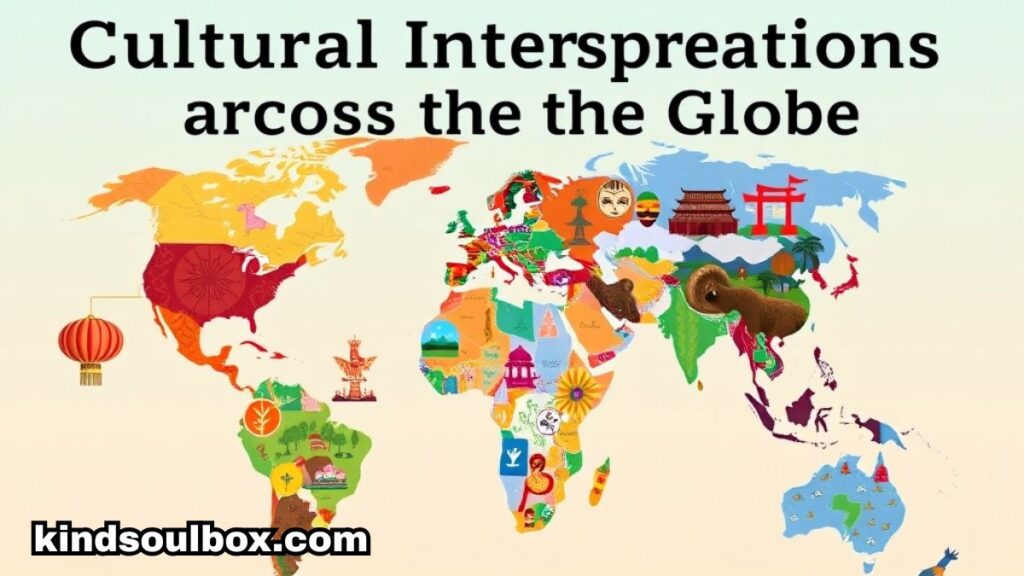
The seventh son concept appears in various forms worldwide, proving humans across cultures love assigning meaning to patterns.
European Variations in Detail
Irish folklore remained most detailed about the seventh son’s abilities. Irish communities believed:
- Such individuals could heal the “king’s evil” (scrofula) by touch
- They possessed “second sight” to see spirits
- Their blessing could protect crops and livestock
- They couldn’t refuse a request for healing without losing their gift
Western European peasant communities often sought out claimed seventh sons during illness outbreaks. Before modern medicine, desperate people turned to anywhere for hope.
Eastern European legends took darker turns. Some traditions suggested the seventh son faced unique spiritual dangers—more vulnerable to demonic influence precisely because of their potential power.
Beyond Europe
Generational beliefs about birth order extend far beyond Europe:
- Some Asian cultures consider the seventh child particularly lucky
- African traditions sometimes assign special roles to specific birth positions
- South American folklore includes various birth-order superstitions
These cultural variations share common threads: humans seeking patterns, wanting to believe some people possess special access to power or wisdom, and creating systems that explain why certain individuals seem gifted.
The Alleged Powers: Examining the Claims
Let’s scrutinize what folklore actually claims about seventh sons and what explains these beliefs.
The Healing Touch Phenomenon
Historical accounts describe seventh sons who allegedly cured diseases by touch or prayer. Before dismissing this entirely, consider several factors:
The Placebo Effect remains powerful. When someone believes they’re receiving special healing, their body sometimes responds positively. Modern medicine recognizes this as a genuine biological phenomenon—not supernatural, but real.
Natural remission occurs with many conditions. Timing a visit to a healer during natural recovery creates the appearance of miraculous intervention.
Lack of scientific understanding in pre-modern societies meant any recovery seemed miraculous. Spontaneous healing that we now understand through immunology appeared magical to medieval villagers.
Documented Cases Worth Examining
Several historical figures claimed seventh son of a seventh son status:
Valentine Greatrakes (1628-1683) in Ireland became famous for healing by touch. Thousands sought him out. Contemporary accounts describe seemingly inexplicable cures. Modern analysis? Likely combination of placebo effect, natural remission, and selective memory of successes while forgetting failures.
Johann Joseph Gassner (1727-1779) in Germany performed exorcisms and healings. Church authorities investigated and found his methods questionable. His career demonstrates how religious doctrine and folk traditions sometimes clashed.
Why These Myths Persist
Pre-modern communities had compelling reasons to believe:
- No alternative explanations for spontaneous healing
- Strong community belief systems reinforced by oral traditions
- Desperate need for hope during disease outbreaks
- Limited access to actual medical care
- Human fascination with myth and the supernatural
The beliefs offered psychological comfort. Knowing a healer lived nearby provided reassurance, even if the healing never came.
Christianity’s Stance: What the Church Actually Teaches
Major Christian denominations consistently reject the seventh son mythology as incompatible with biblical teachings.
Official Religious Positions
Catholic doctrine cautions against superstition and makes clear distinctions between spiritual gifts from the Holy Spirit and folk magic. The Catechism explicitly warns against seeking supernatural powers outside God’s ordained channels.
Protestant theology emphasizes Scripture alone (sola scriptura). Since the Bible never mentions seventh son powers, Protestant teachers uniformly categorize it as superstition incompatible with faith-based Christianity.
Orthodox Christian tradition, while respecting legitimate miracles and saints, rejects any notion that birth order confers spiritual authority or power.
Biblical Warnings Against Superstition
Scripture speaks directly to these issues:
Deuteronomy 18:10-12 forbids divination, sorcery, interpreting omens, and consulting mediums. These practices characterized pagan nations surrounding Israel.
Galatians 5:19-21 lists “witchcraft” among works of the flesh opposed to the Spirit.
Acts 8:9-24 tells of Simon the Sorcerer, who wanted to buy spiritual power. Peter rebuked him harshly: “May your money perish with you, because you thought you could buy the gift of God with money!”
The Dangerous Theological Slide
When people believe birth order grants power, they’ve stepped away from core Christian doctrine:
- Salvation comes through faith in Christ—not through birth circumstances
- Spiritual gifts come from the Holy Spirit—not from family position
- God chooses and equips people according to His will—not based on whether they’re seventh-born
The seventh son myth subtly suggests humans can possess inherent supernatural abilities apart from God. That contradicts everything Scripture teaches about humanity’s nature and God’s sovereignty.
Pop Culture’s Amplification of the Myth
Modern entertainment has breathed new life into ancient folklore, creating feedback loops that reinforce misconceptions about biblical teachings.
Literature’s Role
Orson Scott Card’s novel Seventh Son (1987) launched a popular fantasy series set in an alternate America where folk magic works. The protagonist is—you guessed it—a seventh son of a seventh son with immense power.
Countless fantasy novels employ the trope. Terry Pratchett referenced it. So did numerous young adult fantasy series. Each iteration plants the idea deeper in cultural consciousness.
Music and Media
Iron Maiden’s 1988 album Seventh Son of a Seventh Son brought the concept to rock culture. The title track describes a prophetic figure born with the gift and curse of foresight.
Movies and television shows from Charmed to various fantasy series have woven seventh son elements into plotlines, always presenting it as an ancient truth rather than invented folklore.
The Entertainment-to-Belief Pipeline
Here’s the problem: Entertainment rarely includes disclaimers explaining that these are fictional concepts. Young people especially absorb these ideas, then assume they must have a biblical or historical basis.
The cycle perpetuates: Folklore inspires fiction, fiction feels authoritative because it’s published/produced, and new audiences mistake popular culture for religious tradition or scriptural truth.
Modern Spiritual Movements and New Age Interpretations
Contemporary spiritual seekers have embraced the seventh son concept, detaching it further from its folklore roots and definitely from Christian doctrine.
New Age Adoption
Modern spiritual discourse often treats the concept as a metaphysical truth. New Age practitioners might claim:
- Seventh sons possess higher vibrational frequencies
- They’re “old souls” with accumulated wisdom
- Their birth order indicates spiritual evolution
- They serve as natural healers or energy workers
None of these ideas appears in Scripture. They represent modern inventions that borrow ancient mysticism’s language while creating entirely new systems.
The Discernment Challenge
Christians navigating modern spiritual conversations face challenges in distinguishing:
- Biblical truth from borrowed religious symbolism
- Legitimate spiritual gifts from manufactured mystical claims
- Scripture-based faith from personalized faith interpretation unmoored from doctrine
The solution? Always return to what Scripture actually says. Test every claim against God’s Word. Don’t accept spiritual assertions simply because they sound ancient, mystical, or widely believed.
Resources for Fact-Checking
When evaluating spiritual claims:
- Search Scripture directly—does the Bible mention this?
- Consult respected biblical scholars and theologians
- Examine church history—what have Christians historically taught?
- Apply logic—does this claim glorify God or elevate humans?
- Consider fruit—does this belief draw people toward Christ or toward superstition?
Spiritual growth requires discernment. Not every spiritual-sounding idea comes from God.
Practical Application: How Christians Should Respond
So your friend mentions the seventh son legend, or your child encounters it in a fantasy novel, or someone claims spiritual authority based on birth order. How do you respond with both truth and grace?
Addressing the Myth Graciously
Start by acknowledging the genuine curiosity behind the question. People aren’t ignorant for wondering about these things—they’re products of cultures saturated with mixed messages.
Then provide clarity: “The seventh son of a seventh son idea comes from European folklore, not the Bible. It’s fascinating cultural mythology, but it’s not part of Christian doctrine or scriptural teaching.”
Teaching Biblical Literacy
The best defense against spiritual misconceptions? Deep familiarity with what Scripture actually says.
Regular Bible reading builds immunity to false teachings. When you know what’s actually in God’s Word, you quickly recognize what isn’t.
Bible study that examines context—not just isolated verses—develops a mature faith-based understanding. You learn to distinguish biblical symbolism from later traditions.
When Traditions Become Problematic
Not all cultural practices contradict Scripture. Many traditions sit comfortably alongside Christian faith.
The seventh son belief crosses into problematic territory when:
- People seek supernatural power through birth order rather than through Christ
- It replaces biblical truth about spiritual gifts and calling
- It promotes superstition incompatible with Christian doctrine
- It attributes to humans powers that belong to God alone
Engaging Conversations About Mysticism
When mystical topics arise, Christians can:
Listen first. Understand why this person finds the topic compelling.
Ask questions. “Where did you learn about this? What attracts you to this idea?”
Share Scripture. “Here’s what the Bible actually says about how God works…”
Point to Jesus. The ultimate supernatural reality is Christ—His incarnation, death, resurrection, and ongoing work through the Holy Spirit.
Offer better alternatives. “Instead of seeking power through birth order, let’s explore the genuine spiritual gifts God offers believers.”
Related Biblical Concepts That Are Actually Real
While the seventh son mythology lacks scriptural foundation, the Bible overflows with genuine supernatural realities.
God’s Authentic Gifts and Callings
Scripture describes actual spiritual gifts the Holy Spirit distributes:
- Prophecy
- Teaching
- Healing (through prayer and God’s power—not inherent human ability)
- Wisdom
- Faith
- Discernment
- Administration
- Mercy
Notice these gifts come from God, not from birth circumstances. First Corinthians 12 explains the Spirit distributes gifts “as he determines”—according to God’s sovereign will, not human lineage.
Biblical Examples of Unexpected Chosen Ones
Scripture celebrates God’s pattern of choosing unlikely people:
Moses stuttered and argued with God, yet led Israel from slavery.
Gideon hid from enemies, called himself the least in his family, yet defeated armies.
David tended sheep while his brothers looked impressive, yet he became Israel’s greatest king.
Mary was an unknown teenager from Nazareth, yet she bore the Messiah.
The disciples were fishermen, tax collectors, and nobodies by society’s standards, yet they turned the world upside down.
God delights in demonstrating His power through weak, ordinary people. This glorifies Him, not them.
How God Really Works Through Individuals
Divine calling follows consistent biblical patterns:
- God initiates based on His purposes
- He equips those He calls with what they need
- He works through surrendered, obedient people
- He receives the glory for what’s accomplished
- The results advance His kingdom, not human reputation
This looks nothing like folklore’s claims about inherent powers through lucky birth order.
The Holy Spirit’s Actual Supernatural Empowerment
When Jesus ascended, He sent the Holy Spirit to empower believers. Acts 1:8 promises: “You will receive power when the Holy Spirit comes on you.”
This power enables:
- Witnessing boldly about Christ
- Living in holiness despite temptation
- Loving enemies supernaturally
- Enduring persecution with joy
- Demonstrating Christ’s character
Real supernatural power comes through a relationship with Jesus and the Spirit’s indwelling presence—not through birth order mythology.
Comparative Analysis: Folklore vs. Scripture
| Aspect | Seventh Son Folklore | Biblical Teaching |
|---|---|---|
| Source of Power | Birth order position | God’s sovereign choice |
| Who Qualifies | Specific family position | Anyone God calls |
| Purpose | Personal power/status | God’s glory, kingdom advancement |
| Basis | Cultural tradition | Divine revelation in Scripture |
| Verification | Oral tradition, anecdotal | Written Word of God |
| Focus | Human abilities | God’s power through humans |
| Availability | Rare, birth-dependent | Available to all believers |
| Authority | Community belief | God’s Word |
This table reveals the fundamental incompatibility between folklore belief and biblical doctrine.
The Danger of Mixing Scripture and Superstition
When people blend biblical teachings with cultural mythology, several problems emerge:
Confusion about God’s character. If birth order grants power, God seems arbitrary or bound by mechanical spiritual laws rather than sovereignly personal.
Misunderstanding salvation. People might think special birth circumstances make them closer to God or more spiritually qualified.
Diminished gospel. If humans possess inherent supernatural abilities, they need less dependence on Christ.
Opened doors to deception. Accepting one unbiblical belief creates vulnerability to others.
Weakened witness. Non-Christians dismiss Christianity when believers promote superstitions alongside gospel truth.
Conclusion
The seventh son of a seventh son Bible verse simply doesn’t exist. Scripture never mentions this concept. Seventh Son of a Seventh Son Bible Verse. It belongs entirely to folklore and cultural mythology, not biblical teaching. Seventh Son of a Seventh Son Bible Verse. Christians must distinguish between fascinating legends and actual scriptural truth. Your faith should rest on God’s Word alone.
Understanding that the seventh son of a seventh son Bible verse isn’t real protects you from superstition. Seventh Son of a Seventh Son Bible Verse. Real spiritual power comes through Jesus Christ and the Holy Spirit—not through lucky birth order. Seventh Son of a Seventh Son Bible Verse. Study Scripture directly. Build your faith on what the Bible actually says, not on myths that sound spiritual but lack divine authority. Seventh Son of a Seventh Son Bible Verse.
FAQs
Is the seventh son of a seventh son mentioned in the Bible?
No. The Bible never mentions this concept anywhere in Scripture. It originates from European folklore, not biblical teaching.
What does the number seven mean in the Bible?
Seven represents completion and divine perfection in Scripture. It appears in Creation’s seven days, Revelation’s seven seals, and throughout the Bible as God’s symbolic number.
Where did the seventh son legend come from?
The belief originated in Celtic and European folklore during medieval times. Irish and Scottish traditions especially promoted this myth about healing powers and supernatural abilities.
Do Christian churches accept the seventh son belief?
No. Catholic, Protestant, and Orthodox churches all reject this as superstition incompatible with biblical doctrine and Christian teaching about spiritual gifts.
How should Christians view folklore about birth order powers?
Christians should appreciate folklore as cultural history while recognizing it’s not scriptural truth. Real spiritual gifts come from the Holy Spirit, not birth circumstances.