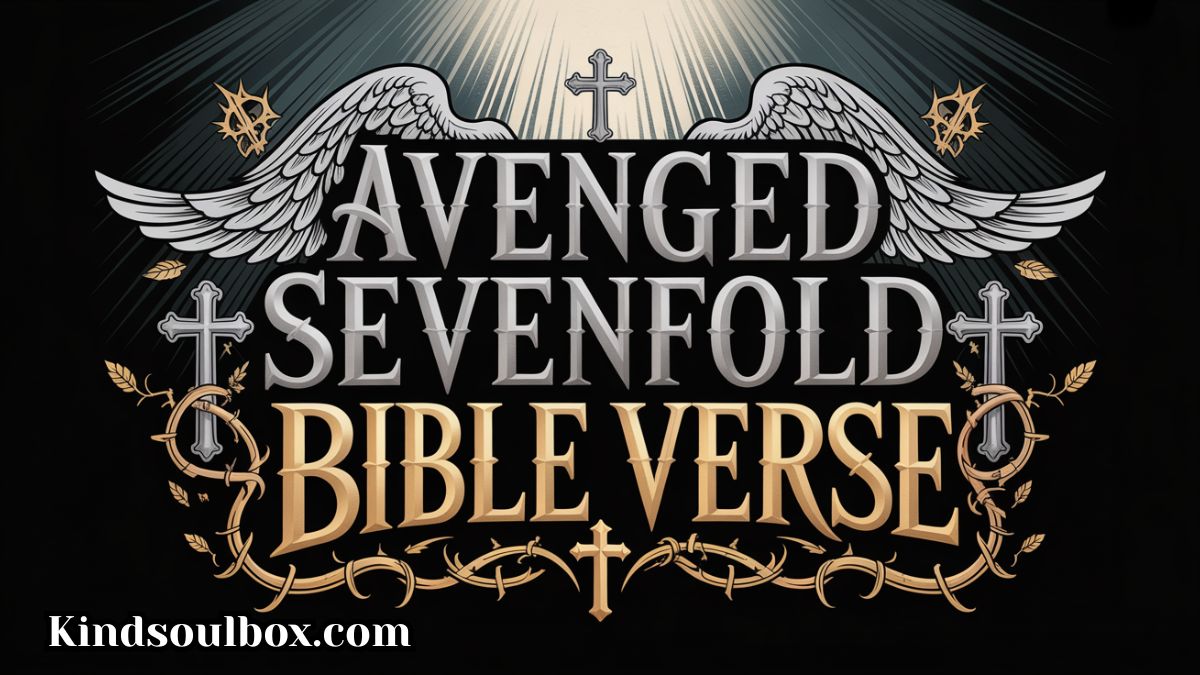
The Avenged Sevenfold Bible verse refers to Genesis 4:15, where God promises sevenfold vengeance upon anyone who harms Cain after history’s first murder. This ancient scripture became the namesake for one of modern rock’s most provocative bands, A7X, who’ve spent two decades weaving biblical allusions into their metal anthems.
M. Shadows didn’t choose this holy text randomly. He discovered a moral dilemma so raw it still echoes: Why does God protect a murderer? That question—unanswered for millennia—became the foundation for exploring redemption, revenge, and human fallibility through crushing riffs.
Most metal bands either worship or reject religion outright. Avenged Sevenfold does neither. They dissect biblical concepts like surgeons, extracting spiritual themes and existential questions that resonate whether you’ve read scripture or not. Their approach transforms ancient theological underpinnings into visceral storytelling that challenges comfortable beliefs.
The Genesis Connection: Cain’s Mark as Foundation
Genesis 4:15 appears after history’s first murder. Cain kills Abel out of jealousy, then God marks him with protection despite his crime. The passage reads: “Then the Lord said to him, ‘Not so! If anyone kills Cain, vengeance shall be taken on him sevenfold.’ And the Lord put a mark on Cain, lest any who found him should attack him.”
Divine protection for a murderer creates immediate tension. Justice collides with mercy. Punishment meets grace. That paradox runs through every Avenged Sevenfold album.
The band chose this holy text deliberately in 1999. They weren’t looking for shock value. They wanted a name reflecting moral dilemmas humanity faces when authority—divine or otherwise—operates outside expected boundaries. Why does God protect Cain? The Bible doesn’t fully explain. A7X built their artistic identity around similar unanswered questions.
Key Elements of Genesis 4:15
| Biblical Concept | Band’s Interpretation | Musical Expression |
|---|---|---|
| Divine vengeance | Justice vs. mercy tension | Heavy, aggressive riffs |
| Protection of the guilty | Moral ambiguity | Complex lyrical narratives |
| Sevenfold multiplication | Amplified consequences | Epic song structures |
| The mark of Cain | Outcast identity | Dark visual aesthetics |
Biblical Themes Woven Throughout Their Discography

Avenged Sevenfold’s music doesn’t just reference scripture casually. Their albums construct entire theological underpinnings that mirror biblical concepts from creation to apocalypse.
Creation and Fall Imagery
Their songs frequently explore temptation and its aftermath. The Eden narrative—humanity’s original choice between obedience and knowledge—surfaces repeatedly. But A7X flips the script. They don’t present Eden as paradise lost. They frame it as humanity’s necessary rebellion.
This deeper meaning appears in tracks exploring consequences of choices. Characters face downfall not because they’re evil, but because they’re human. That’s pure Genesis theology repackaged for rock music audiences.
Apocalyptic and Revelation References
“Beast and the Harlot” pulls directly from Revelation 17. The track describes Babylon’s fall with apocalyptic imagery that mirrors John’s vision on Patmos. The band’s work doesn’t soften the violence. They amplify it.
Here’s what makes their approach unique: A7X lyrics treat Revelation not as prophecy but as psychological landscape. The end times become internal. Your personal apocalypse matters more than cosmic judgment day.
Key apocalyptic themes in their catalog:
- Four Horsemen symbolism representing conquest, war, famine, death
- Babylon’s fall as metaphor for corrupted systems
- Life after death explored through resurrection imagery
- Divine disappointment in humanity’s trajectory
- Judgment day scenarios played out in personal relationships
Moral Parables and Prodigal Journeys
The prodigal son story—Luke 15:11-32—echoes through their work. Lost sons. Wasteful choices. Desperate returns. Redemption earned through suffering rather than freely given.
“Afterlife” captures this hero’s journey perfectly. A soul searches for meaning beyond mortality, confronting both hope and despair. The song meaning operates on multiple levels: literal death, emotional numbness, spiritual quests for purpose.
M. Shadows’ Personal Spiritual Journey
M. Shadows grew up Catholic in Orange County. That upbringing shaped his philosophical influences even as he questioned everything it taught.
In a 2013 interview, he explained: “I’m not religious, but I’m fascinated by religion. The stories in the Bible are incredible narratives about human fallibility and trying to find meaning.”
This tension—faith rejected but religious themes embraced—defines Avenged Sevenfold’s approach. They’re not anti-religious like some metal bands. They’re post-religious. The spiritual themes matter. The dogma doesn’t.
Evolution Across Albums
| Album Era | Spiritual Approach | Notable Shift |
|---|---|---|
| Sounding the Seventh Trumpet | Raw biblical anger | Youthful rebellion |
| City of Evil | Epic mythology | Maturing storytelling |
| Avenged Sevenfold (Self-titled) | Personal introspection | Loss and grief explored |
| Nightmare | Direct afterlife questions | The Rev’s death impact |
| The Stage | Cosmic philosophy | Existential musings expand beyond scripture |
Specific Biblical Parallels in Key Songs
“Hail to the King”
This anthem about kingship and power draws from 1 Samuel’s warnings about monarchy. When Israel demands a king, God warns them through Samuel that human rulers will exploit them. “Hail to the King” presents that exact scenario—authority corrupted by morality failures.
The chorus doesn’t celebrate power. It critiques it. That’s sophisticated biblical allusions at work.
“God Hates Us”
Controversial title aside, this track explores divine disappointment through Job’s lens. Job questions why the righteous suffer while the wicked prosper. “God Hates Us” asks similar questions but removes easy answers.
The thematic content suggests not that God literally hates humanity, but that humanity has created hell on earth. We’re Cain after the murder—marked, protected, but wandering.
“Beast and the Harlot”
Direct Revelation 17 adaptation. The Whore of Babylon rides a seven-headed beast, drunk on martyr’s blood. A7X transforms this vision into commentary on corrupted institutions—religious, political, economic.
The lyrical content stays remarkably faithful to source material while making it visceral and immediate. This isn’t distant prophecy. It’s Tuesday.
Visual Theology: Album Art and Symbolism
The Deathbat—A7X’s skeletal winged mascot—carries spiritual undertones often overlooked. Wings suggest angels or demons. The skull represents mortality. Combined, they create a memento mori: remember you will die.
That’s deeply Christian imagery repurposed for rock genre aesthetics.
Nightmare Album Artwork
The 2010 album featured explicit crucifixion imagery, stained glass aesthetics, and gothic cathedral vibes. Released months after The Rev’s death, the artwork explored grief through religious iconography.
Community discussions erupted. Was it sacrilege? Tribute? Both?
The band never clarified. That ambiguity serves their mission—making audiences wrestle with moral conflicts rather than accepting easy interpretations.
Fan Interpretations and Theological Debates
Listener community splits sharply on Avenged Sevenfold’s use of scripture. Some Christian fans embrace the biblical references as starting points for deeper level conversations about faith. Others condemn the band for “misusing” holy text.
On forums like Reddit’s r/avengedsevenfold and dedicated Facebook groups, fans dissect song interpretation with seminary-level analysis. One user wrote: “They’re doing what Flannery O’Connor did—using shocking imagery to make people think about spirituality they’d otherwise ignore.”
The Spectrum of Response
Religious ideologies shape how people receive their music:
- Conservative Christians: Often reject the band for “blasphemy”
- Progressive Christians: Appreciate the philosophical themes and questioning
- Secular fans: Enjoy storytelling without religious baggage
- Spiritual-not-religious crowd: Find existential contemplation resonant
- Atheists: Value the moral dilemmas divorced from divine authority
Comparing A7X to Other Metal Acts
Avenged Sevenfold occupies unique territory in heavy metal. They’re not Christian metal like August Burns Red or Demon Hunter. they’re not anti-Christian like Deicide or Behemoth.
They’re theologically curious.
Modern rock rarely achieves this balance. Bands either embrace faith fully or reject it violently. A7X does neither. They examine it like anthropologists studying fascinating but foreign culture.
Contrast with Explicit Christian Bands
Christian metal bands use biblical allusions for evangelism. Their compositions aim toward conversion or worship. Avenged Sevenfold songs aim toward contemplation. Big difference.
Contrast with Anti-Religious Acts
Black metal bands often position themselves against Christianity explicitly. A7X doesn’t fight religion. They borrow its literary devices and allegories for richer narrative construction.
Cultural Impact: Gateway to Biblical Literacy
Here’s something unexpected: Avenged Sevenfold has introduced more teenagers to Bible stories than many youth pastors.
A 2018 survey by Barna Group showed only 15% of Americans under 30 could name five Old Testament books. Yet A7X fans routinely discuss Cain and Abel, Revelation’s imagery, and prodigal son parables.
The band never intended to educate. But their meaningful lyrics sparked curiosity. Fans Googled “Beast and Harlot Revelation” and discovered apocalyptic literature. They searched “sevenfold vengeance Bible” and read Genesis.
Educational Ripple Effect
Youth ministers reported using A7X songs as discussion starters. One pastor in Texas told Christianity Today: “If I reference Revelation cold, I get blank stares. If I play ‘Beast and the Harlot’ first, suddenly they’re engaged.”
That’s accidental ministry through rock band’s compositions.
Evolution of Spiritual Messaging Over Time
The Stage (2016) marked a philosophical expansion. While earlier albums focused on biblical concepts, this release explored Carl Sagan, Ray Kurzweil, and cosmic insignificance.
Religious references didn’t disappear. They multiplied and diversified. Buddhism, Taoism, and secular humanism joined Christian imagery in their thematic content.
M. Shadows explained the shift: “We’re interested in big questions. The Bible asks some of them. So does neuroscience. So do Greek philosophers. Why limit ourselves?”
This maturation shows a band that used scripture as foundation, then built outward toward universal themes.
Conclusion
The Avenged Sevenfold Bible verse from Genesis 4:15 launched more than a band name. It sparked twenty-five years of spiritual exploration through heavy metal. A7X proved scripture still resonates when stripped of dogma and amplified through distortion. They made ancient moral dilemmas feel urgent again.
Today, the Avenged Sevenfold Bible verse continues inspiring millions. Fans discover biblical allusions they’d never encounter otherwise. M. Shadows and his bandmates transformed holy text into modern rock philosophy. They didn’t preach. They questioned. And that made their music unforgettable. AVENGED SEVENFOLD BIBLE VERSE. Scripture meets metal—and both emerge more powerful.
FAQS
What Bible verse is Avenged Sevenfold named after?
Genesis 4:15 – “If anyone kills Cain, vengeance shall be taken on him sevenfold.” The band adopted this verse in 1999 as their official name.
Is Avenged Sevenfold a Christian band?
No. M. Shadows has stated they’re not religious but fascinated by biblical stories. They use scripture for storytelling, not evangelism.
Which Avenged Sevenfold song has the most biblical references?
“Beast and the Harlot” draws directly from Revelation 17, describing Babylon’s fall and apocalyptic imagery with remarkable accuracy to the source text.
Did M. Shadows grow up religious?
Yes. He was raised Catholic in Orange County, California. That upbringing influenced his lyrical themes even after he stopped practicing the faith.
What does the sevenfold vengeance mean in the Bible?
It represents complete, divinely multiplied protection God placed on Cain. Seven symbolizes completeness in scripture, making the punishment for harming Cain total and devastating.