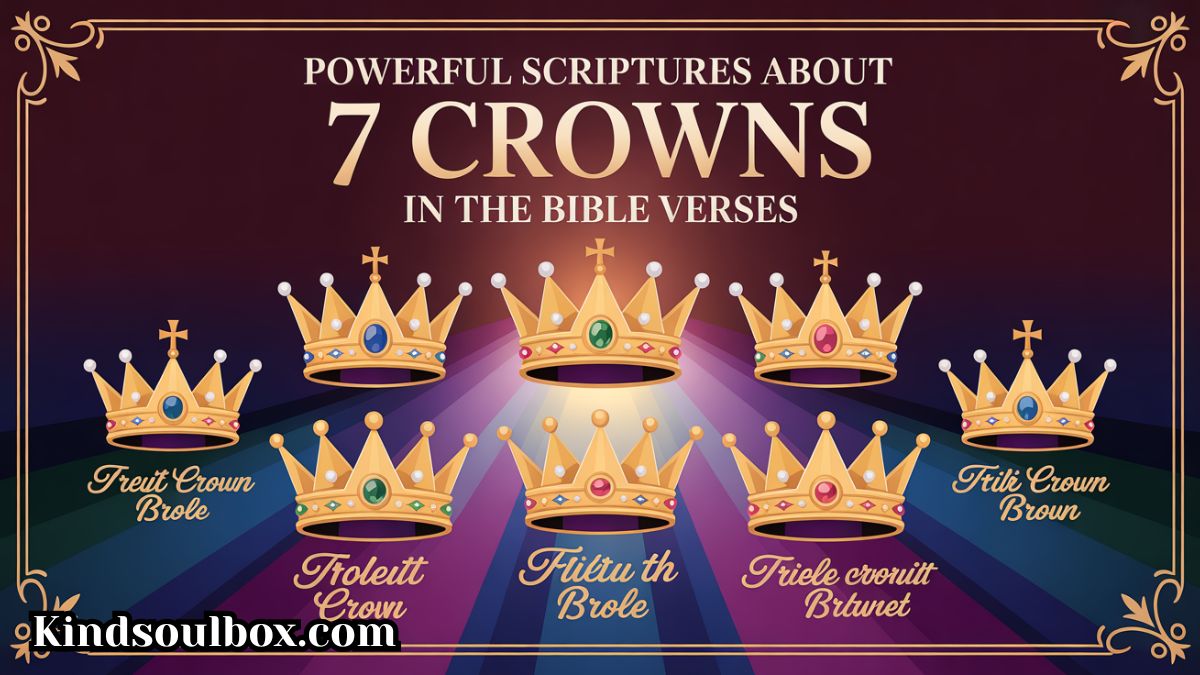
Powerful Scriptures About 7 Crowns in The Bible Verses explore divine rewards promised to faithful believers throughout Scripture. These crowns represent eternal recognition for devoted service, spiritual discipline, and unwavering commitment to Christ. Biblical crowns symbolize God’s generous system of heavenly compensation for earthly faithfulness.
Imagine standing before Christ and receiving imperishable crowns—then casting them at His feet in worship. That stunning scene awaits every believer who pursues righteousness with passion. These aren’t myths or metaphors; they’re concrete promises from God’s Word that transform how you live today.
Scripture reveals five distinct crowns believers can earn: the incorruptible crown, the crown of rejoicing, the crown of righteousness, the crown of life, and the crown of glory. Additionally, Revelation unveils prophetic imagery, including Satan’s seven crowns and Christ’s many crowns. Understanding these powerful passages ignites motivation for faithful service and an eternal perspective on temporary sacrifices.
Understanding Biblical Crowns: Foundation and Context
Before diving into specific crowns of righteousness Bible passages, we need a foundational understanding. The Bible employs two distinct Greek words for “crown,” each carrying unique significance.
Stephanos refers to the victor’s wreath—a crown given to athletes, military heroes, and distinguished citizens. Think of Olympic champions receiving their laurels. This temporary crown symbolized achievement and honor. Every believer’s crown mentioned in Paul’s letters uses this term.
Diadema represents royal authority and sovereign power. Kings wore these crowns as symbols of their right to rule. When Revelation describes Jesus with many crowns, it uses diadema to emphasize His supreme authority over all creation.
The Judgment Seat of Christ
2 Corinthians 5:10 establishes the foundation for understanding heavenly crowns in the Bible: “For we must all appear before the judgment seat of Christ; that every one may receive the things done in his body, according to that he hath done, whether it be good or bad.”
This isn’t about salvation—that’s settled by the grace of God through faith. The Bema seat (Greek term for judgment seat) evaluates how we lived after accepting Christ. Picture an ancient athletic competition where the judge awarded crowns to victors. Our works pass through divine fire, and only what survives receives reward.
Key distinctions about the judgment seat:
- Who: All believers in Jesus Christ
- When: After the Rapture, before the Second Coming
- What: Evaluation of works, not salvation status
- Why: To distribute eternal rewards fairly
- Result: Some receive crowns, others experience a loss of reward
The Apostle Paul wrote extensively about this examination. He understood that Christian service matters eternally, motivating him to discipline his body and keep it under control (1 Corinthians 9:27).
The Five Crowns for Believers: Eternal Rewards
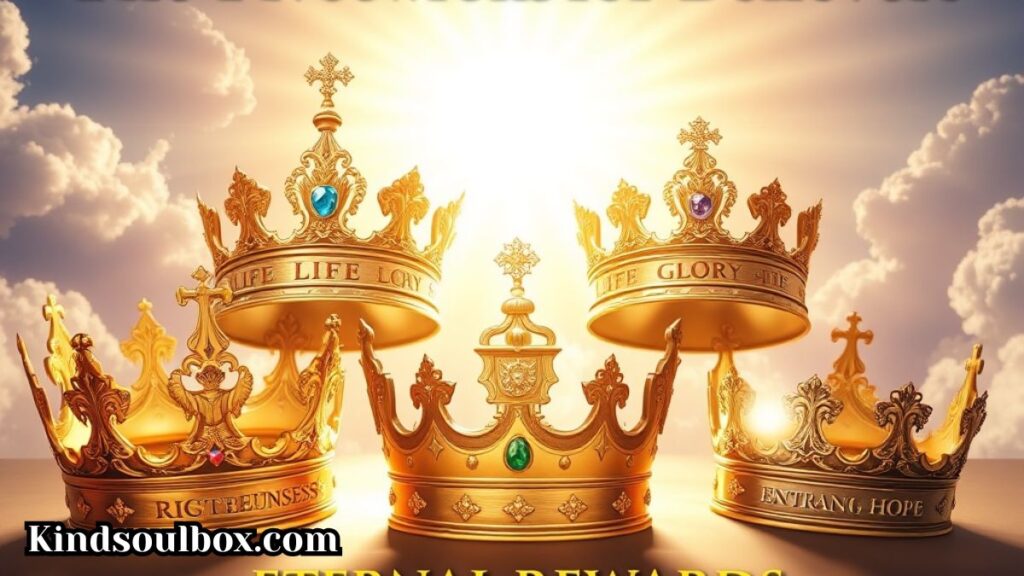
Scripture describes five distinct crowns available to every believer. These aren’t competitive prizes where only one person wins. God’s reward system operates on abundance, not scarcity. Multiple people can receive the same crown, and faithful Christians might earn all five.
The Incorruptible Crown (Victor’s Crown)
1 Corinthians 9:24-27 introduces the first crown: “And every man that striveth for the mastery is temperate in all things. Now they do it to obtain a corruptible crown, but we an incorruptible crown, Scripture.”
Paul draws parallels between athletic competition and spiritual discipline. Ancient Greek athletes trained intensely for temporary wreaths that wilted within days. We train for something far superior—an eternal crown that never fades, tarnishes, or diminishes.
This victor’s crown Bible verse requires:
- Self-control in all areas of life
- Disciplined spiritual practices
- Intentional character development
- Mastery over sinful desires
- Running the race with purpose
Paul practiced what he preached. He wrote, “But I keep under my body, and bring it into subjection: lest that by any means, when I have preached to others, I myself should be a castaway.” He feared not losing salvation but being disqualified from receiving rewards.
Practical application today:
Daily Bible reading and prayer constitute basic training. Fasting, worship, and Scripture memorization build spiritual muscle. When you resist temptation, you’re training for this crown. Every choice to obey God rather than flesh prepares you for eternal life.
Think of Stephen, the first martyr. His disciplined life of faith prepared him to face stones without flinching. That’s the power of spiritual conditioning.
The Crown of Rejoicing (Soul-Winner’s Crown)
1 Thessalonians 2:19 asks a penetrating question: “For what is our hope, or joy, or crown of rejoicing Bible verses? Are not even ye in the presence of our Lord Jesus Christ at his coming?”
Paul considered his converts his crown. When he stands before Christ, the Thessalonian believers themselves will be his reward. This soul winner’s crown goes to everyone who leads others to Jesus.
Philippians 4:1 reinforces this truth: “Therefore, my brethren dearly beloved and longed for, my joy and crown, so stand fast in the Lord, my dearly beloved.”
The Philippian church represented Paul’s eternal investment. He poured his life into them, and they became his crown of glory.
Who qualifies for this crown:
| Role | Contribution |
|---|---|
| Evangelists | Share the gospel publicly |
| Missionaries | Take Christ to unreached peoples |
| Sunday School Teachers | Disciple children in faith |
| Bible Study Leaders | Help believers grow deeper |
| Parents | Raise children to know God |
| Friends | Witness through relationships |
| Anyone | Who points someone toward Christ |
You don’t need formal ministry credentials. The mother who prays her child into the kingdom earns this crown. The factory worker who shares Jesus during lunch breaks qualifies. The teenager who invites classmates to the youth group participates in soul-winning.
Case Study: D.L. Moody
The famous evangelist traced his conversion to his Sunday School teacher, Edward Kimball. Kimball visited young Moody at the shoe store where he worked and led him to Christ. That single conversation launched a ministry that reached millions.
Imagine Kimball’s crown of rejoicing! Not only does he receive a reward for leading Moody to Christ, but likely shares in the fruit of all those Moody subsequently reached. That’s the multiplication effect of evangelism.
The Crown of Righteousness
2 Timothy 4:6-8 contains Paul’s triumphant declaration: “Henceforth there is laid up for me a crown of righteousness, which the Lord, the righteous judge, shall give me at that day: and not to me only, but unto all them also that love his appearing.”
This crown awaits those who eagerly anticipate Christ’s return. It’s not about perfect behavior—righteousness comes through Christ alone. Rather, it recognizes the believer who lives with eternity constantly in mind.
Paul was facing execution when he wrote these words. Death held no terror because he’d lived looking forward to seeing Jesus face-to-face. That second coming focus shaped every decision.
1 Timothy 6:11-12 encourages Timothy: “But thou, O man of God, flee these things; and follow after righteousness, godliness, faith, love, patience, meekness. Fight the good fight of faith, lay hold on eternal life, whereunto thou art also called.”
Fighting the good fight doesn’t mean physical combat. It’s spiritual warfare—resisting temptation, standing firm in truth, pursuing holiness despite opposition.
Characteristics of crown recipients:
- Yearn for Jesus’ return
- Study prophecy with anticipation
- Live as if He might return today
- Make decisions with eternity in view
- Prioritize heavenly treasures over earthly gain
- Remain spiritually vigilant
The crown of righteousness Bible promise isn’t exclusive to Paul. Notice he says, “not to me only, but unto all them also that love his appearing.” You qualify by loving Christ’s return.
When you choose integrity over compromise because Jesus might return today, you’re pursuing this crown. When you forgive quickly because eternity matters more than being right, you’re living crown-worthy.
The Crown of Life (Martyr’s Crown)
James 1:12 promises: “Blessed is the man that endureth temptation: for when he is tried, he shall receive the crown of life Bible verse, which the Lord hath promised to them that love him.”
Revelation 2:10 adds specificity: “Fear none of those things which thou shalt suffer: behold, the devil shall cast some of you into prison, that ye may be tried; and ye shall have tribulation ten days: be thou faithful unto death, Bible, and I will give thee a crown of life.”
This martyr’s crown Scripture recognizes two groups:
- Those who die for their faith (literal martyrs)
- Those who endure temptation and trials without wavering
Martyrdom remains tragically common. According to Open Doors USA, approximately 360 million Christians face high levels of persecution globally. Thousands die annually for refusing to renounce Christ.
But you don’t need to die physically to earn this crown. Enduring temptation qualifies you. The cancer patient who maintains faith through suffering pursues this crown. The spouse who remains faithful despite an unfaithful partner demonstrates martyr-like commitment.
Acts 7:54-60 records Stephen’s death—the first Christian martyr:
“And they stoned Stephen, calling upon God, and saying, Lord Jesus, receive my spirit. And he kneeled, and cried with a loud voice, Lord, lay not this sin to their charge. and when he had said this, he fell asleep.”
Stephen died like Jesus—forgiving his murderers. That’s faithfulness unto death. His name means “crown,” and he certainly earned the crown of life.
Modern application:
Every believer faces spiritual warfare. When you resist sexual temptation despite overwhelming desire, you’re enduring temptation. When you remain honest in business, though lying would profit you, you’re demonstrating martyr-level commitment to truth.
The crown of life celebrates victory over trials. God doesn’t promise the absence of difficulty, but reward for perseverance through it.
The Crown of Glory (Elder’s/Shepherd’s Crown)

1 Peter 5:1-4 specifically addresses spiritual leadership: “The elders which are among you I exhort, who am also an elder, and a witness of the sufferings of Christ, and also a partaker of the glory that shall be revealed: Feed the flock of God which is among you, taking the oversight thereof, not by constraint, but willingly; not for filthy lucre, but of a ready mind; Neither as being lords over God’s heritage, but being examples to the flock. And when the chief Shepherd shall appear, ye shall receive a crown of glory, Bible verse that fadeth not away.”
The Apostle Peter outlines requirements for this pastor’s crown Bible:
Positive requirements:
- Feed the flock with God’s Word
- Serve willingly, not under compulsion
- Lead by example, not force
- Maintain pure motives
- Exercise humble authority
Disqualifications:
- Serving for money (“filthy lucre”)
- Domineering leadership
- Reluctant service
- Self-serving agendas
- Neglecting the flock’s spiritual needs
This crown isn’t limited to senior pastors. Elders, small group leaders, youth pastors, and anyone exercising spiritual authority qualify. The key is shepherding God’s people with Christ-like character.
John 21:16-17 records Jesus commissioning Peter: “He saith to him again the second time, Simon, son of Jonas, lovest thou me? He saith unto him, Yea, Lord; thou knowest that I love thee. He saith unto him, Feed my sheep.”
Feeding the flock means providing spiritual nourishment through teaching, counseling, encouragement, and modeling authentic faith. It’s not about building your ministry brand—it’s about building God’s people.
Warning about disqualification:
Many who hold leadership positions won’t receive this crown. Jesus warned about religious leaders who devour widows’ houses and love recognition (Matthew 23:5-7). Leadership without servant-heartedness disqualifies you from reward.
The crown of glory awaits those who shepherd like the Chief Shepherd—sacrificially, lovingly, and humbly.
Prophetic Crowns in the Book of Revelation
The Book of Revelation introduces different crowns—not rewards for believers, but symbolic crowns in Revelation representing authority and power. These apocalyptic symbolism Bible images reveal spiritual realities behind earthly events.
The Twenty-Four Elders and Their Golden Crowns
Revelation 4:4 describes a throne room scene: “And round about the throne were four and twenty seats: and upon the seats I saw four and twenty elders sitting, clothed in white raiment; and they had on their heads gold crowns.”
Who are these elders? Scholars debate, but most agree they represent the redeemed church. The number twenty-four might symbolize the twelve team of Israel plus the twelve apostles—the complete people of God throughout history.
Their gold crowns indicate they’ve already been judged and rewarded. They wear white garments (righteousness) and sit on thrones (authority to reign with Christ).
Revelation 4:10-11 reveals what they do with their crowns: “The four and twenty elders fall down before him that sat on the throne, and worship him that liveth for ever and ever, and cast their crowns before the throne, saying, Thou art worthy, O Lord, to receive glory and honour and power.”
This powerful image teaches a crucial truth: our crowns exist to worship God. We don’t wear them arrogantly. We cast them at Jesus’ feet in recognition that every achievement, every victory, every reward flows from His grace.
Crowns cast at Christ’s feet symbolize ultimate humility. Everything we accomplished happened because He empowered us. The elders demonstrate that heaven isn’t about our glory—it’s about His.
Demonic Counterfeit: Locusts with Golden Crowns
Revelation 9:7 describes demonic locusts: “And the shapes of the locusts were like unto horses prepared unto battle; and on their heads were as it were crowns like gold, and their faces were as the faces of men.”
These terrifying creatures emerge during the Great Tribulation, tormenting those without God’s seal. Their crowns are fake—”like gold” but not genuine. This represents a satanic imitation of divine authority.
Satan always counterfeits God’s work. He offers false crowns, temporary power, and illusory authority. The demonic crowns’ Revelation description warns believers not to be deceived by appearances.
True authority comes from God alone. Demonic forces may look powerful, but their doom is certain. Their crowns won’t survive divine judgment.
The Great Red Dragon’s Seven Crowns
Revelation 12:3 contains the only explicit seven crowns Bible verse: “And there appeared another wonder in heaven; and behold a great red dragon, having seven heads and ten horns, and seven crowns upon his heads.”
This dragon with seven heads Bible image represents Satan in his full malevolent glory. The great red dragon’s seven crowns symbolize complete earthly dominion—temporary authority over world systems.
Seven represents completeness in biblical numerology. Satan’s seven crowns indicate his comprehensive (but limited) power over earthly kingdoms. He’s “the devil of this world” (2 Corinthians 4:4), but his reign is ending.
Revelation 12:7-9 describes Satan’s defeat: “And there was war in heaven: Michael the archangel and his angels fought against the dragon; and the dragon fought and his angels, and prevailed not; neither was their place found any more in heaven. And the great dragon was cast out, that old serpent, called the Devil, and Satan, which deceiveth the whole world: he was cast out into the earth, and his angels were cast out with him.”
Satan’s seven crowns couldn’t prevent his expulsion from heaven. Michael and the holy angels defeated him decisively. This end-times prophecy crowns scene assures believers that evil won’t triumph.
Key insights about Satan’s crowns:
- Represent temporary earthly power
- Limited to this age
- Cannot prevail against God
- Doomed to removal
- Contrast sharply with Christ’s eternal authority
The Beast from the Sea with Ten Crowns
Revelation 13:1 introduces another crowned figure: “And I stood upon the sand of the sea, and saw a beast rise up out of the sea, having seven heads and ten horns, and upon his horns ten crowns, and upon his heads the name of blasphemy.”
This beast with crowns receives authority from the dragon (Satan). Notice the progression: Satan wears seven crowns (complete earthly authority), while the beast wears ten (intensified human governmental power).
The beast from the sea likely represents the Antichrist—the final world dictator who opposes Christ. His ten crowns symbolize a coalition of kingdoms united under his rule during the tribulation.
Revelation 13:2 clarifies: “And the dragon gave him his power, and his seat, and great authority.”
The beast’s crowns are delegated, not inherent. He rules because Satan empowers him, and only for a divinely limited time. God remains sovereign even when allowing evil temporary ascendancy.
Blasphemy characterizes this regime. The beast claims divine authority, demands worship, and persecutes believers. His crowns represent the mockery of Christ and good vs evil in cosmic conflict.
Christ’s Many Crowns: The King of Kings
Revelation 19:11-12 presents the glorious counter-image: “And I saw heaven opened, and behold a white horse; and he that sat upon him was called Faithful and True, and in righteousness he doth judge and make war. His eyes were as a flame of fire, and on his head were many crowns; and he had a name written, that no man knew, but he himself.”
Jesus, many crowns Scripture contrasts dramatically with earthly pretenders. While Satan wears seven crowns and the beast wears ten, Christ wears “many crowns“—innumerable diadems representing absolute, unlimited authority.
Revelation 19:16 proclaims His title: “And he hath on his vesture and on his thigh a name written, KING OF KINGS, AND LORD OF LORDS.”
Christ’s many crowns signify:
- Supreme authority over all creation
- Rightful rule as Creator and Redeemer
- Victory over every enemy
- Eternal dominion that never ends
- Complete sovereignty in heaven and earth
Revelation 1:8 declares: “I am Alpha and Omega, the beginning and the ending, saith the Lord, which is, and which was, and which is to come, the Almighty.”
Jesus existed before creation, sustains all things, and will reign forever. His crowns aren’t temporary or delegated. They belong to Him by right as God incarnate.
The hymn “Crown Christ with Many Crowns” celebrates this truth:
Crown Him with many crowns
The Lamb upon His throne
Hark how the heavenly anthem drowns
All music but its own
Authority of Christ Revelation passages assure believers that, regardless of current circumstances, Jesus wins. Every knee will bow before the One wearing many crowns.
Theological Implications: Crowns and Christian Living

Understanding biblical crowns transforms how we live. These aren’t obscure doctrines—they’re motivational truths that shape daily choices.
Rewards Versus Salvation
First, clarity: salvation comes solely through grace. Ephesians 2:8-9 states unequivocally: “For by grace are ye saved through faith; and that not of yourselves: it is the gift of God: Not of works, lest any man should boast.”
Crowns don’t save you. Jesus saves you through His death and resurrection. Crowns represent rewards for faithful service after salvation.
Think of it this way:
- Salvation = entering the wedding feast
- Crowns = your seating arrangement and responsibilities at the feast
Everyone who trusts Christ gets heaven. But heaven isn’t a homogeneous experience where everyone has identical roles and rewards. God’s justice requires differentiation based on faithfulness.
Hebrews 12:1 encourages: “Wherefore seeing we also are compassed about with so great a cloud of witnesses, let us lay aside every weight, and the sin which doth so easily beset us, and let us run with patience the race that is set before us.”
We run not to earn salvation, but to win crowns. Paul could say, “I have finished my course” (2 Timothy 4:7) because he’d run faithfully, not perfectly.
Motivation Without Works-Based Salvation
Some worry that emphasizing crowns leads to works-righteousness. It doesn’t if we maintain proper theology.
Believers serve from gratitude, not obligation. Christ’s love compels us (2 Corinthians 5:14). Crowns provide additional motivation, but grace remains foundational.
Picture a child whose father promises a reward for good grades. The child studies not to earn the father’s love (already secured), but to please the father and receive the promised prize. Similarly, we serve God from love, with crowns as generous bonuses He offers.
1 Corinthians 15:58 concludes: “Therefore, my beloved brethren, be ye stedfast, unmoveable, always abounding in the work of the Lord, forasmuch as ye know that your labour is not in vain in the Lord.”
Your service matters. Nothing done for Christ is wasted. Every act of obedience, every sacrifice, every difficult choice for righteousness—God sees and will reward.
Eternal Perspective on Temporary Sacrifices
Crowns help us endure hardship. Paul wrote, “For I reckon that the sufferings of this present time are not worthy to be compared with the glory which shall be revealed in us” (Romans 8:18).
When martyrs died singing hymns, eternal rewards sustained them. When missionaries leave comfort for dangerous fields, crowns in heaven motivate them. when parents sacrifice careers to raise godly children, the crown of rejoicing makes it worthwhile.
Proverbs 3:5-6 counsels: “Trust in the Lord with all thine heart; and lean not unto thine own understanding. In all thy ways acknowledge him, and he shall direct thy paths.”
Trusting God means believing His reward system is real and generous. Heaven isn’t a participation trophy—it’s a divine reward calibrated to actual faithfulness.
Practical Application: Living Crown-Worthy Lives Today
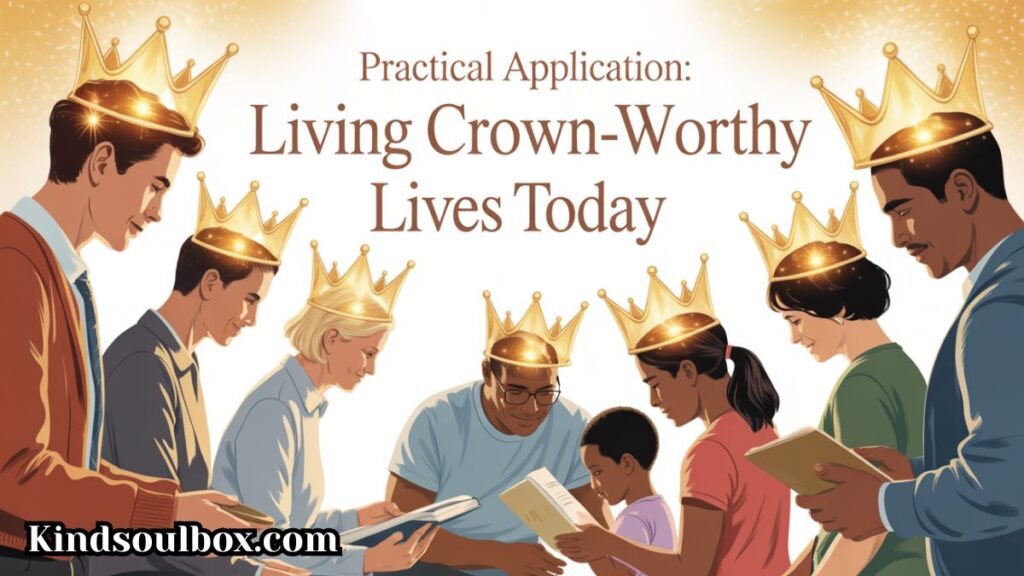
How do we pursue these crowns practically? Here are actionable steps for each:
Pursuing the Incorruptible Crown:
- Establish daily prayer and Bible reading habits
- Practice fasting regularly
- Memorize Scripture systematically
- Confess and repent of sin quickly
- Develop fruit of the Spirit through intentional practice
- Submit to accountability relationships
Earning the Crown of Rejoicing:
- Share your testimony with unbelievers
- Invite people to church or Bible studies
- Support missionaries financially and through prayer
- Disciple new believers
- Teach children about Jesus
- Live authentically so your life draws people to Christ
Obtaining the Crown of Righteousness:
- Study biblical prophecy
- Live expectantly, as if Christ might return today
- Make decisions based on eternal life values, not temporal comfort
- Regularly evaluate priorities through eternity’s lens
- Resist worldly entanglements
- Pursue holiness in all areas
Receiving the Crown of Life:
- Stand firm under temptation
- Maintain faith during suffering
- Forgive those who wrong you
- Choose obedience despite cost
- Support persecuted Christians globally
- Prepare mentally for potential martyrdom
Attaining the Crown of Glory:
- Shepherd those under your care lovingly
- Lead by example, not dictation
- Prioritize spiritual feeding over entertainment
- Pray faithfully for those you lead
- Reject pride and embrace humility
- Focus on people’s growth, not your reputation
The “7 Crowns” Question Answered
So why do people search for “7 crowns in the Bible“?
The confusion stems from Revelation 12:3—the only verse explicitly mentioning seven crowns. Those belong to Satan, not believers.
Believers can earn five distinct crowns:
- Incorruptible Crown (Victor’s Crown)
- Crown of Rejoicing (Soul-Winner’s Crown)
- Crown of Righteousness
- Crown of Life (Martyr’s Crown)
- Crown of Glory (Elder’s/Shepherd’s Crown)
Revelation adds prophetic crowns:
- Twenty-four elders’ gold crowns
- Demonic locusts with fake crowns
- Satan’s seven crowns
- Beast’s ten crowns
- Christ’s many crowns
Don’t get caught up in numerology. Focus instead on faithfulness. God doesn’t reward crown-counting—He rewards Christ-exalting lives.
The biblical meaning of crowns centers on God’s generous reward system for believers who serve Him wholeheartedly. Whether you earn one crown or all five, the goal remains the same: casting them at Jesus’ feet in worship.
Conclusion
Powerful Scriptures About 7 Crowns in The Bible Verses reveal God’s incredible reward system for faithful believers. 7 Crowns in The Bible Verses. These crowns aren’t earned through perfection but through devoted service and perseverance. 7 Crowns in The Bible Verses. Every believer can pursue these eternal prizes. Your daily choices matter. 7 Crowns in The Bible Verses. Your sacrifices count. God sees everything and rewards generously.
Understanding Powerful Scriptures About 7 Crowns in The Bible Verses transforms how you live today. 7 Crowns in The Bible Verses. These promises motivate faithful service and endurance through trials. 7 Crowns in The Bible Verses. Five crowns await believers who remain steadfast. 7 Crowns in The Bible Verses. Christ’s many crowns remind us He reigns supreme. 7 Crowns in The Bible Verses. Live with eternity in view. 7 Crowns in The Bible Verses. Run your race with purpose. Cast your crowns at Jesus’ feet in worship.
FAQs
What are the 7 crowns mentioned in the Bible?
The Bible describes five crowns for believers (incorruptible, rejoicing, righteousness, life, and glory) plus prophetic crowns in Revelation. Only Satan’s seven crowns appear as an exact “7 crowns” reference in Revelation 12:3.
Can all believers earn these crowns in heaven?
Yes, all believers can earn multiple crowns through faithful service, evangelism, enduring trials, righteous living, and spiritual leadership. Crowns are rewards for faithfulness, not salvation itself, which comes through grace alone.
What is the difference between Stephanos and diadema crowns?
Stephanos refers to the victor’s wreath given for achievement (believer’s crowns), while diadema represents royal authority and sovereign power (worn by kings and Christ). Each Greek term carries a distinct meaning in Scripture.
Will we keep our crowns in heaven forever?
Revelation 4:10 shows the twenty-four elders casting their crowns before God’s throne in worship. We receive crowns as rewards but ultimately lay them at Jesus’ feet, recognizing all glory belongs to Him alone.
How do I pursue the crown of life today?
Endure temptation without wavering, remain faithful during trials and suffering, stand firm in persecution, and maintain your commitment to Christ regardless of cost. James 1:12 promises this crown to those who persevere.